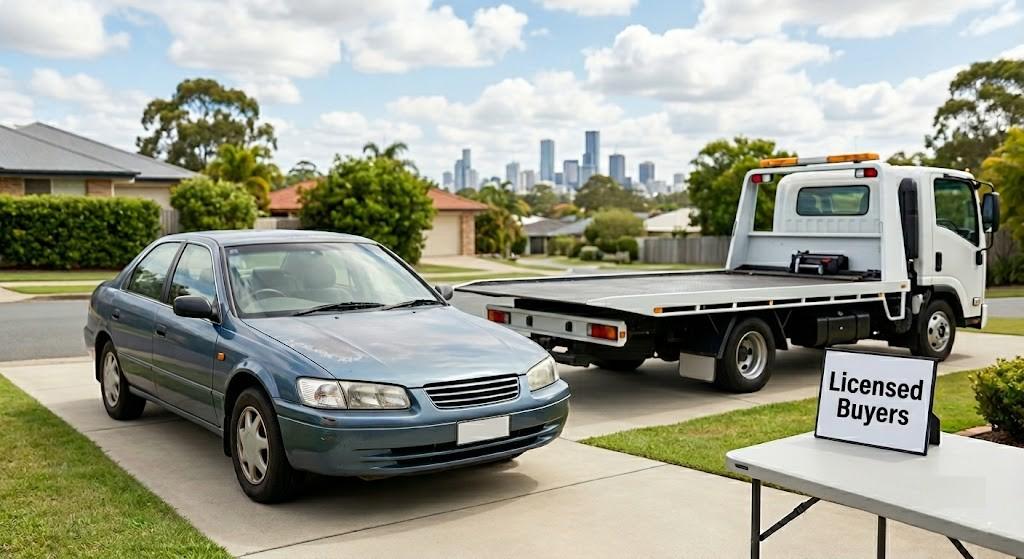
To avoid scams when selling a car in Brisbane, verify the buyer’s motor dealer licence, insist on secure payment methods, and ensure the company provides a physical business address and clear proof of ownership transfer.
The private car market in Queensland presents risks for unsuspecting sellers. Scammers often use sophisticated tactics to lower the price or take possession of a vehicle without paying. Licensed buyers provide a regulated environment that protects the consumer throughout the transaction. Trusting a professional service ensures you follow Queensland transport laws while receiving a fair market price for your asset.
5 Common Scams in the Private Car Market
Identifying a scam early saves you from financial loss and legal headaches. Scammers typically rely on pressure tactics or “too good to be true” offers.
-
The Overpayment Scam: A buyer sends a fake cheque for more than the asking price and asks for the “change” back.
-
Phantom Buyers: Someone offers to buy the car sight-unseen but requests personal banking details for a “deposit.”
-
Identity Theft: “Buyers” ask for copies of your driver’s licence or registration papers to “verify” the car, then use these documents for fraud.
-
The Mechanical Fault Trick: A buyer pours oil into the coolant during a test drive to claim the engine is blown and demands a massive discount.
-
Unlicensed Towing: Unmarked trucks arrive to “remove” your car but never send the promised electronic transfer.
Why Licensing Matters in Queensland
Licensed motor dealers operate under a strict code of conduct enforced by the Office of Fair Trading. This regulatory oversight provides 3 specific layers of protection for Brisbane residents.
| Feature | Private Individual / Unlicensed Buyer | Licensed Buyer (e.g., Cash For Car Brisbane) |
| Legal Accountability | None; difficult to track if a dispute occurs. | Full accountability under QLD Motor Dealers Act. |
| Payment Security | Cash (risky) or personal cheques (unreliable). | Instant OSKO bank transfers or secure business cheques. |
| Paperwork | Seller often responsible for all forms. | Buyer manages TMR (Transport and Main Roads) transfers. |
| Identity Verification | You don’t know who is entering your home. | Staff carry company ID and represent a registered ABN. |
Features and Functions of a Legitimate Car Buyer
A legitimate car buying service functions as a licensed intermediary between the owner and the recycling or resale market. These businesses provide specific tools to make the sale transparent and safe.
-
Valuation Engines: Professional buyers use real-time market data to calculate offers based on weight, parts, and demand.
-
On-Site Inspection: Technicians arrive in branded vehicles to verify the car’s condition before finalising the price.
-
Towing Infrastructure: Companies own a fleet of tilt-tray trucks to safely remove non-running vehicles.
-
Instant Payment Systems: Digital platforms allow for immediate fund transfers that reflect in your account before the truck leaves.
Situational Relevance: When to Use a Licensed Buyer
Selling to a licensed buyer is the safest choice in specific high-risk or high-stress situations. These contexts often involve vehicles that are difficult to sell to private parties.
To determine if a licensed buyer is necessary, assess your personal safety and the car’s condition. Use a licensed service if you live alone and do not want strangers visiting your home after dark. This is also relevant for “statutory write-offs” or cars with significant mechanical failures, such as 15-year-old sedans with blown head gaskets. Licensed buyers handle the complex environmental and legal requirements for these specific cases.
Pros and Cons of Professional Buying Services
Understanding the trade-offs helps you make an informed decision regarding your vehicle sale.
Pros
-
Guaranteed Sale: Professional buyers accept 100% of makes and models, including Ford, Toyota, and Mitsubishi.
-
Time Efficiency: The entire process often takes less than 24 hours from quote to removal.
-
Zero Marketing Costs: You avoid paying for listings on platforms like Carsales or Facebook Marketplace.
-
Regulatory Compliance: The buyer ensures the car is legally stripped of its plates and deregistered.
Cons
-
Fixed Pricing: There is less room for “haggling” compared to a private buyer who might fall in love with the car.
-
Wholesale Rates: Prices reflect the convenience and wholesale value rather than the full retail price.
Target Audience for Secure Car Sales
Different groups of Brisbane residents find value in the security provided by licensed buyers.
-
Time-Poor Professionals: Busy workers who cannot wait around for “tyre kickers” or no-show buyers.
-
Seniors: Individuals who prioritise safety and want a respectful, transparent transaction at their doorstep.
-
Deceased Estate Executors: People managing the disposal of a loved one’s vehicle who need clear paper trails for legal reasons.
-
Remote Sellers: Owners who have already moved interstate and need a trusted local entity to collect a car left behind.
Examples of Secure Payment and Transfer Methods
Legitimate companies use 4 primary methods to ensure the seller receives their money and loses their liability.
-
OSKO/PayID: Funds appear in your account within seconds, providing immediate verification.
-
Electronic Funds Transfer (EFT): A standard business-to-consumer transfer with a provided receipt number.
-
TMR Online Transfer: The buyer completes the “Notice of Disposal” online, which instantly notifies the government.
-
Paper Receipts: A physical document detailing the ABN, licence number, and final purchase price.
Why Brisbane Residents Choose Cash For Car Brisbane
Cash For Car Brisbane provides a reliable alternative to the risky private market by offering guaranteed payments and professional car removal services across all Brisbane suburbs.
Choosing this brand removes the uncertainty of dealing with strangers. They operate with a clear physical presence and a reputation for fair dealings in the local community. Their staff follow a standard operating procedure for every pick-up, ensuring they drain fluids safely and handle metal recycling ethically. By using a company with deep roots in the Queensland automotive industry, you avoid the common pitfalls of the “underground” scrap market.
visit: https://www.cashforcarbrisbane.com.au/
Step-by-Step Checklist for a Safe Sale
To ensure a smooth transaction, follow these 6 steps when the buyer arrives at your property.
-
Check ID: Ask to see the driver’s licence or company identification of the person collecting the car.
-
Remove Personal Items: Check the glove box, under seats, and in the boot for documents, sunglasses, or toll tags.
-
Take Your Plates: Remove your Queensland number plates to return them to TMR for a registration refund.
-
Verify Payment: Do not sign the transfer papers until the money is visible in your bank account or you hold a secure cheque.
-
Get a Receipt: Ensure the buyer provides a signed document including the date, time, and purchase amount.
-
Take Photos: Capture images of the car on the tow truck as proof of the condition when it left your possession.
Frequently Asked Questions
Is it legal to sell a car without a Roadworthy Certificate (RWC)?
Yes, you can sell a car without an RWC if you sell it to a licensed motor dealer or if you sell it “unregistered.”
How do I know if a buyer is licensed?
You can check the Queensland Government’s public register of motor dealer licences using the company’s name or licence number.
Do I need to clean the car before a licensed buyer collects it?
No, licensed buyers purchase cars in “as-is” condition, so you do not need to spend money on professional detailing or car washes.