Digital expectations evolve rapidly. Users demand fast performance, consistent messaging, and seamless experiences across devices. At the same time, businesses must publish content frequently and adapt quickly to change. Therefore, traditional page based website structures often struggle to keep up with modern demands.
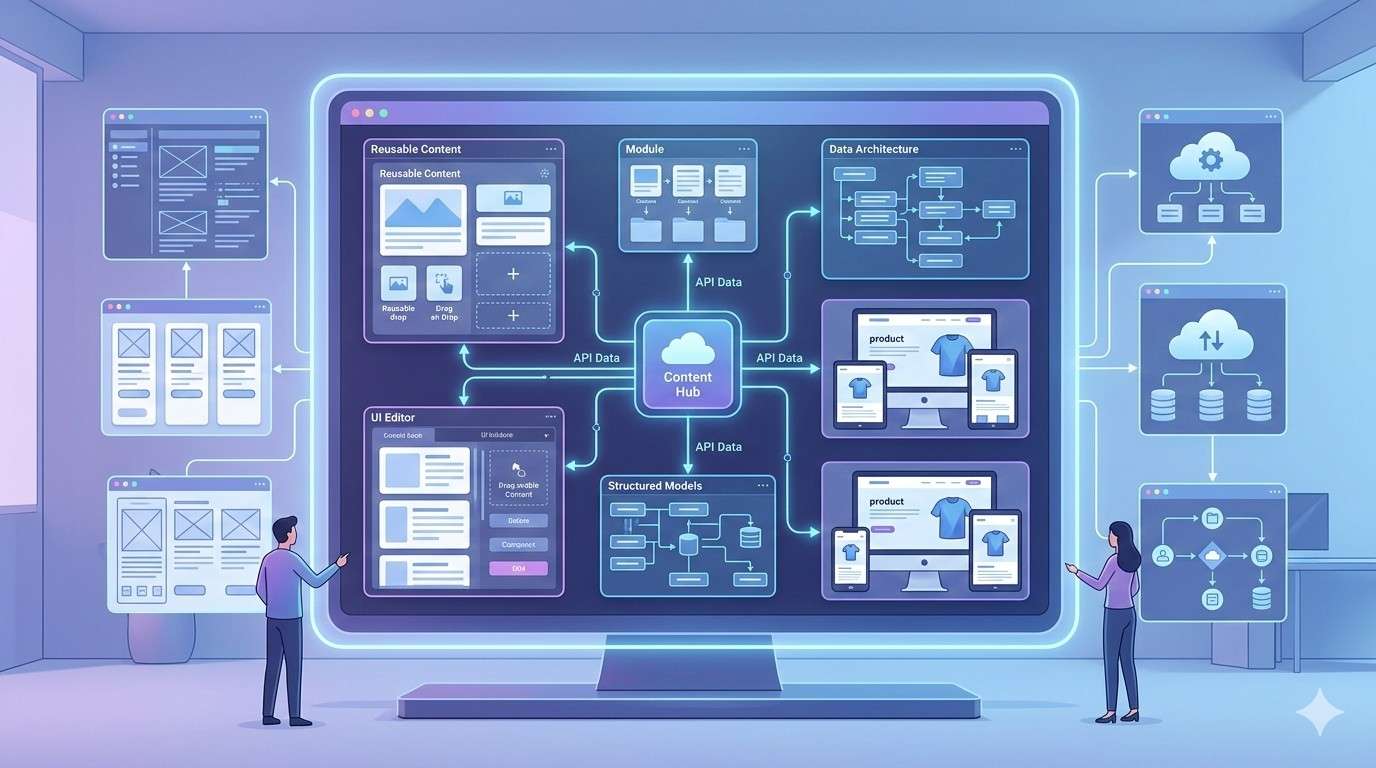
Modular content design offers a flexible alternative. Instead of creating rigid pages, teams build reusable content components. Many organizations collaborate with a trusted contentful development company to implement structured models that separate content from presentation. This approach ensures that websites remain scalable, adaptable, and easier to maintain as digital ecosystems grow more complex.
Future ready websites are not built around static layouts. They rely on structured systems that allow content to move freely across platforms. Modular design creates the foundation for agility, efficiency, and long term growth.
Understanding Modular Content Design
Modular content design breaks information into smaller reusable blocks. These blocks include headings, body text, images, calls to action, and metadata. Each block exists independently within a structured system.
Unlike traditional page builders, modular systems focus on flexibility. Designers create templates that assemble content dynamically. Editors fill structured fields without worrying about layout restrictions.
This separation between content and presentation supports consistent branding. It also simplifies updates. When a module changes, every page using it reflects the update automatically.
Why Traditional Page Structures Limit Growth
Traditional CMS platforms often bind content tightly to specific layouts. While this approach works for smaller sites, it creates challenges at scale. Updating global elements requires editing multiple pages manually.
Moreover, duplicating content across sections increases maintenance effort. As websites expand, inconsistencies emerge. Teams spend more time fixing issues than creating value.
Modular content design eliminates duplication. It promotes reuse and central management. As a result, websites remain organized even as they grow.
Enhancing Scalability Through Reusable Components
Scalability is essential for future readiness. Businesses frequently launch new campaigns, products, and landing pages. Modular systems allow teams to assemble new pages quickly using existing components.
For example, a testimonial module can appear across product pages, blogs, and promotional sections. Editors simply reference the module instead of recreating content. This efficiency accelerates publishing cycles.
Reusable components also simplify localization. Teams translate modules once and deploy them across regional sites. This structured approach supports global expansion without complexity.
Supporting Omnichannel Experiences
Modern audiences interact with brands beyond websites. Mobile apps, digital kiosks, and smart devices require consistent content delivery. Modular content design supports omnichannel strategies naturally.
Because content exists independently from layout, APIs distribute it across platforms easily. A product description can power both a website and a mobile application simultaneously.
This flexibility ensures consistent messaging across touchpoints. Businesses maintain brand coherence while adapting to various screen sizes and formats.
Improving Collaboration Across Teams
Future ready websites require cross functional collaboration. Writers, designers, and developers must work together efficiently. Modular systems create clarity in responsibilities.
Writers focus on content accuracy within structured fields. Designers craft templates that render modules attractively. Developers ensure data flows correctly through APIs.
Clear structure reduces miscommunication. Teams spend less time resolving formatting issues. Instead, they concentrate on strategic objectives.
Accelerating Website Updates and Redesigns
Redesigning a website traditionally involves extensive content migration. However, modular systems simplify redesign efforts significantly. Because content and layout are separate, teams update front end designs without rewriting content.
This separation protects content investments. Businesses refresh visual identity while preserving structured data. Redesign cycles become shorter and less disruptive.
Additionally, modular design supports iterative improvements. Small changes roll out gradually rather than through large scale overhauls.
Enhancing Performance and SEO
Performance plays a critical role in user satisfaction and search rankings. Modular systems often integrate with headless architectures and content delivery networks. This setup improves loading speed and scalability.
Structured fields also support SEO optimization. Metadata, alt text, and schema elements integrate seamlessly. Consistent formatting improves search engine crawlability.
Because modules are reusable, teams maintain keyword consistency across pages. This strengthens search visibility and brand authority.
Strengthening Governance and Quality Control
Governance becomes increasingly important as websites expand. Modular systems provide clear content models and validation rules. Required fields prevent incomplete submissions.
Role based permissions enhance control. Editors manage specific modules without affecting others. This structure reduces accidental changes.
Audit trails track updates and revisions. Managers review changes easily. Governance frameworks protect content integrity over time.
Enabling Personalization and Dynamic Content
Future ready websites prioritize personalization. Modular design supports dynamic assembly of content based on user behavior. Systems combine modules differently depending on preferences or location.
For instance, returning visitors may see personalized recommendations automatically. Promotional banners adjust based on browsing history. Modular components make such personalization manageable.
Dynamic content improves engagement and conversion rates. Structured models ensure personalization does not compromise consistency.
Preparing for Emerging Technologies
Digital landscapes evolve continuously. Voice interfaces, augmented reality, and new devices reshape user expectations. Modular content design prepares businesses for these innovations.
Because content is structured and independent, new platforms connect through APIs. There is no need to rebuild databases from scratch. Instead, organizations extend existing systems.
Future readiness depends on adaptability. Modular design provides the flexibility required to integrate emerging technologies seamlessly.
Best Practices for Implementing Modular Content Design
Successful implementation begins with thoughtful content modeling. Teams must define clear content types and relationships. Overly complex models create confusion, while oversimplified structures limit flexibility.
Stakeholder collaboration ensures alignment. Editorial and technical teams should design models together. This partnership balances usability and scalability.
Regular audits maintain system health. As business needs evolve, models require refinement. Continuous optimization preserves efficiency and clarity.
Training also supports adoption. Teams must understand how modules function within the system. Proper onboarding accelerates productivity.
Conclusion
Building future ready websites requires more than modern design trends. It demands a flexible, scalable foundation rooted in modular content design. By separating content from presentation, organizations unlock adaptability and efficiency.
Reusable components streamline publishing, enhance collaboration, and simplify updates. Structured systems support omnichannel delivery, personalization, and long term innovation.
As digital demands continue to evolve, businesses must embrace adaptable architectures. Modular content design offers the resilience necessary to thrive in an ever changing digital environment