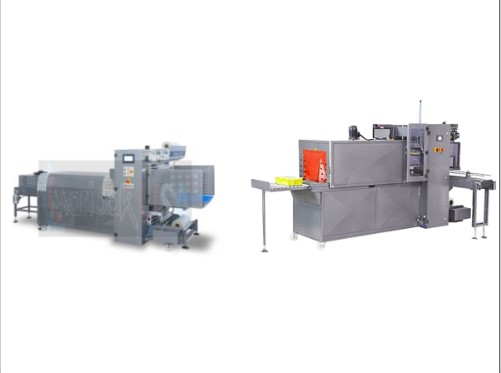
Modern packaging lines demand speed, accuracy, and repeatable quality across every cycle. Manufacturers handling diverse product sizes and film types increasingly rely on automation to meet output targets without sacrificing presentation. In this landscape, an automatic shrink wrap machine equipped with servo-driven controls offers a clear advantage by replacing inconsistent pneumatic actions with digitally controlled motion. This technology allows packaging operations to maintain tighter tolerances, cleaner seals, and smoother product flow. By integrating intelligent controls, manufacturers can reduce waste, improve uptime, and achieve consistent results even at higher speeds, making servo-driven systems a strategic investment for growing production environments.
What Is a Fully Automatic Shrink Wrap Machine
A fully automatic shrink wrap machine is designed to perform sealing and wrapping functions with minimal human intervention. Products are conveyed into the sealing area, film is precisely positioned, and seals are executed automatically before entering the heat tunnel. In the center of this workflow, the automatic shrink wrap machine ensures uniform packaging by synchronizing product movement, film feed, and sealing cycles. Unlike semi-automatic systems, these machines are built for continuous operation, making them ideal for medium- to high-volume production lines that require consistent throughput and professional package appearance.
Role of Servo-Driven Controls in Packaging Precision
Servo-driven controls replace traditional mechanical or air-based movements with electronically controlled motors. This allows each motion—sealing arm travel, film feed, and conveyor timing—to be programmed and adjusted digitally. Within a modern automatic shrink wrap machine, servo technology enables precise speed control and repeatable positioning, which directly improves seal integrity and reduces film distortion. Operators can fine-tune settings through a touchscreen interface, ensuring that changes in product dimensions or film thickness do not compromise packaging quality or efficiency.
Performance Benefits for High-Output Operations
High-speed production environments benefit significantly from servo-driven automation. These systems deliver smoother acceleration and deceleration, reducing mechanical stress and wear. In practical terms, an automatic shrink wrap machine with servo control can maintain stable performance over long production runs while minimizing downtime. Faster changeovers, reduced film waste, and consistent seal quality all contribute to lower operating costs.
Flexibility Across Products and Film Types
Packaging operations frequently handle a range of product sizes and materials. Servo-driven systems provide the flexibility required to adapt quickly without extensive mechanical adjustments. By reprogramming parameters, a single automatic shrink wrap machine can accommodate different films, pack heights, and throughput requirements. This adaptability is especially valuable for contract packagers or manufacturers with frequently changing SKUs, as it ensures reliable results without slowing down production or increasing setup time.
Improved Reliability and Maintenance Advantages
Reliability is a critical factor in automated packaging. Servo-driven machines are designed with fewer wear-prone components compared to pneumatic systems. As a result, a well-engineered automatic shrink wrap machine experiences less mechanical fatigue and more predictable maintenance intervals. Diagnostic features built into control systems also help operators identify issues early, reducing unplanned downtime and extending overall equipment lifespan.
Integration into Modern Packaging Lines
Fully automatic shrink wrap machines are often integrated into complete packaging lines that include infeed conveyors, heat tunnels, and downstream handling equipment. Servo-driven controls make synchronization across these components more precise. When deployed as part of a larger system, an automatic shrink wrap machine can seamlessly match line speeds and ensure consistent product spacing, which is essential for achieving uniform shrink results and maintaining overall line efficiency.
Conclusion
Fully automatic shrink wrap machines with servo-driven controls represent a significant step forward in packaging technology. They combine precision, flexibility, and reliability to support demanding production goals while maintaining high-quality presentation. As packaging requirements continue to evolve, features such as intelligent motion control and synchronized conveying become increasingly important. In modern systems, the inclusion of a motorized belt further enhances smooth product transfer, ensuring stable handling and consistent results throughout the entire shrink wrapping process.