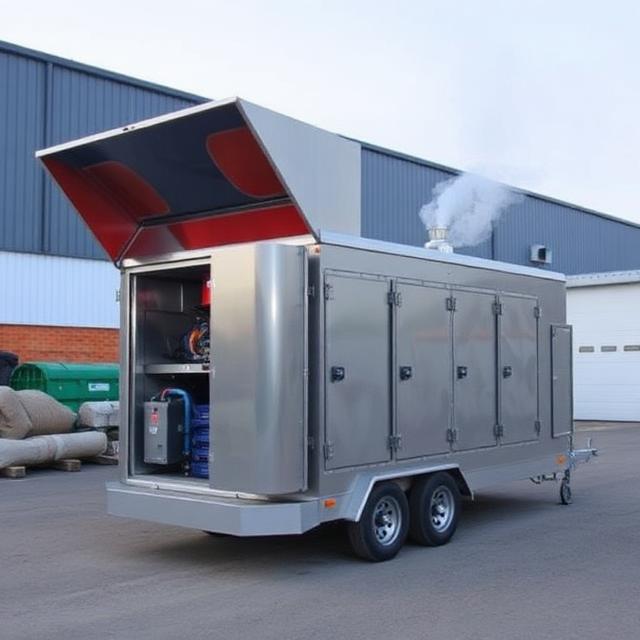
Our waste management service is the most effective way to ensure everything stays within public health and environmental regulations. An effective way for waste disposal is the use of a mobile incinerator, which can treat the waste efficiently and effectively at point place. These systems can process large volumes of waste and are mobile enough to be deployed at multiple locations, ideal for hospitals, remote facilities, and emergency operations.
Efficient on-site waste disposal
The most important feature of a big portable incinerator is that it can treat waste near to the point of waste generation. This decreases the need to transport hazardous materials over long distances to treatment facilities, which lowers potential handling and logistics-related risks. One of the key benefits of a portable hospital incinerator to healthcare institutions is that it guarantees immediate destruction of infectious and biomedical waste, therefore minimizing contamination between the waste generated in these environments and facilitating higher hygiene levels.
Stock capacity operation method for various waste types
Large portable incinerators can process bio-medical waste, industrial waste and municipal waste. Their high-capacity design enables continuous operation, making them ideal for facilities that produce large amounts of waste every day. Advanced combustion chambers ensure that burning is complete; this means waste volume is significantly reduced, and the vast majority is converted into manageable ash rather than gas.
Mobility and operational flexibility
A large portable incinerator can be transported and used in the field where needed, unlike fixed installations. This flexibility is particularly advantageous in cases of emergencies, disaster relief efforts, or temporary construction projects where waste disposal facilities may be lacking. This flexibility is beneficial for hospitals and field units because a hospital incinerator can be moved depending on demand without needing to build something permanent.
Improved environmental compliance
Today, incinerators are equipped with modern emission cleaning systems that minimize the pollutants emitted into the air. Secondary combustion chambers, filters, and scrubbers all help to reduce harmful gases and particulate emissions. If you are looking for a large incinerator with effective operation that doesn’t compromise on environmental regulation compliance, then an efficient portable incinerator is the best to be designed.
Cost-effective waste management solution
A portable incinerator is a significant investment, but it could save you a lot of money over time. However, by cutting out transportation costs and relying less on external disposal services, organizations can better manage waste financially. Moreover, reduced volume of waste along with the burn-to-refuel ratio saves operational costs in the long run.
Enhanced safety and infection control
The practice of proper waste disposal is vital to preventing the spread of infections, especially in health care environments. Hazardous and infectious materials are fully destroyed by a hospital incinerator, limiting exposure to virulent pathogens. The system is even more reliable thanks to built-in safety features and controlled operation.
Supporting sustainable waste practices
The usage of large portable incinerators is essential for sustainable waste management, as they minimize landfill usage and ensure that environmental pollution is controlled. Advanced systems even include heat recovery, which allows a facility not only to produce energy, but for secondary applications as well, improving the overall efficiency of utility usage.
Conclusion:
A mobile incinerator is a large incineration unit that enables efficient and on-site treatment flexible in operation with high throughput. Used as a hospital incinerator, it improves safety and compliance while decreasing costs. Its mobility and performance provide a reliable and modern solution for sustainable waste management.