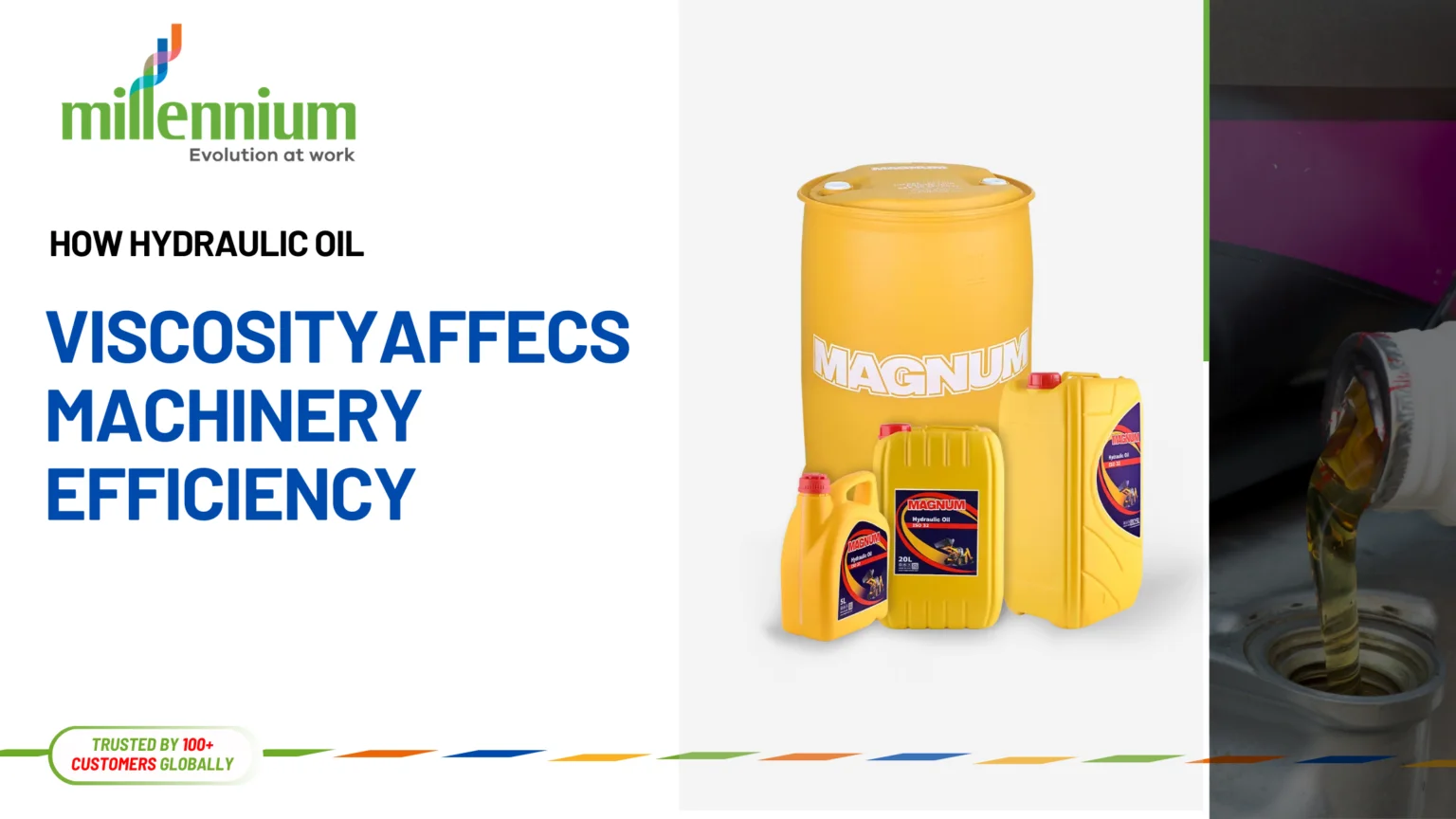
Hydraulic systems are the backbone of heavy equipment, manufacturing lines, construction machinery, and industrial automation. At the heart of every hydraulic system is hydraulic oil, which performs multiple critical functions—power transmission, lubrication, sealing, and cooling. Among its many properties, viscosity plays the most decisive role in determining overall system performance. Even small deviations in viscosity can significantly affect machinery efficiency, reliability, and lifespan.
Understanding how viscosity works and how to control it helps operators reduce downtime, lower energy costs, and extend equipment life.
What Exactly Is Hydraulic Oil Viscosity?
Viscosity refers to a fluid’s resistance to flow. In simple terms, it measures how thick or thin an oil is. A high-viscosity oil is thicker and flows more slowly, while a low-viscosity oil is thinner and flows more easily.
In hydraulic systems, viscosity determines how effectively the oil transmits power and lubricates internal components such as pumps, valves, and cylinders. The oil must be fluid enough to circulate quickly but thick enough to create a protective lubricating film between moving parts.
If viscosity is too high or too low for operating conditions, system efficiency drops and component wear increases.
How Viscosity Influences System Efficiency
1. Energy Efficiency
Hydraulic pumps must work harder when oil viscosity is too high. Thick oil increases internal resistance, making it more difficult for the pump to circulate fluid. This results in:
-
Higher energy consumption
-
Increased system pressure
-
Reduced flow rates
On the other hand, if viscosity is too low, internal leakage increases. Thin oil may slip past seals and clearances, reducing volumetric efficiency. The pump then compensates by working longer or harder, which wastes energy.
Maintaining the correct viscosity ensures smooth flow, optimal pressure levels, and reduced energy losses—improving overall system efficiency.
2. Component Wear and Longevity
Viscosity directly affects the lubrication film between moving components. Proper viscosity creates a protective barrier that prevents metal-to-metal contact.
If viscosity is too low:
-
The lubrication film becomes too thin
-
Increased friction occurs
-
Accelerated wear damages pumps and valves
If viscosity is too high:
-
Oil may not flow quickly enough during cold starts
-
Starvation lubrication can occur
-
Cavitation risk increases
Over time, incorrect viscosity leads to premature equipment failure. Selecting and maintaining the correct viscosity protects expensive hydraulic components and extends operational life.
3. Temperature Control
Hydraulic oil absorbs and dissipates heat generated during operation. Viscosity plays a crucial role in this thermal management process.
High-viscosity oil tends to generate more friction, which raises operating temperatures. Elevated temperatures accelerate oxidation, degrade seals, and reduce oil life.
Low-viscosity oil may circulate quickly but may fail to provide sufficient lubrication under load, also leading to heat buildup.
The correct viscosity allows efficient heat transfer and stable operating temperatures, preventing thermal stress on system components.
Choosing the Right ISO Viscosity Grade
Hydraulic oils are classified using ISO viscosity grades (ISO VG), which define viscosity at 40°C. Common grades include ISO VG 32, 46, and 68.
Selecting the right grade depends on:
-
Ambient operating temperature
-
System design and pump type
-
Load conditions
-
Manufacturer recommendations
For colder climates, lower viscosity grades may be preferred to ensure smooth startup. In high-temperature or heavy-load conditions, higher viscosity grades provide stronger lubrication films.
Following equipment manufacturer guidelines is essential to achieving maximum performance.
Temperature, Stability, and the Role of the Viscosity Index
The viscosity index (VI) measures how much an oil’s viscosity changes with temperature. A higher viscosity index indicates greater stability across temperature variations.
Hydraulic systems often operate in fluctuating temperatures. Oils with a high VI maintain consistent thickness whether the system is starting cold or running at full operating temperature.
Benefits of a high viscosity index include:
-
Improved cold-start performance
-
Reduced thermal thinning
-
Consistent lubrication under varying loads
Temperature stability ensures predictable system behavior and protects components in dynamic operating environments.
What Happens When Viscosity Goes Wrong
Incorrect viscosity can lead to serious operational issues:
-
Increased energy consumption
-
Excessive internal leakage
-
Pump cavitation
-
Seal damage
-
Overheating
-
Reduced response time in actuators
In extreme cases, persistent viscosity mismatch can result in complete hydraulic system failure. Monitoring oil condition regularly helps prevent these costly consequences.
Maintenance Tips to Preserve Viscosity and Performance
Maintaining proper viscosity requires routine inspection and preventive maintenance.
Best practices include:
-
Conduct regular oil analysis
-
Monitor operating temperature trends
-
Replace oil according to service intervals
-
Use proper filtration systems
-
Prevent contamination from water and debris
Contamination can alter viscosity and degrade performance. Water ingress, oxidation, and particulate matter all affect oil thickness and lubrication capability.
Keeping the oil clean and within recommended temperature limits preserves its designed viscosity characteristics.
MAGNUM Hydraulic Oils Built for Stability and Efficiency
High-performance hydraulic oil efficiency are engineered to deliver stable viscosity across a wide temperature range. MAGNUM Hydraulic Oils are formulated with advanced additive technology to maintain oxidation resistance, thermal stability, and consistent flow properties.
Key advantages include:
-
High viscosity index for temperature stability
-
Strong anti-wear protection
-
Excellent oxidation resistance
-
Reliable performance under heavy loads
These characteristics help industrial systems operate smoothly while reducing downtime and maintenance costs.
Final Thoughts
Hydraulic oil viscosity is more than just a technical specification—it is a determining factor in machinery efficiency, durability, and operating cost. The right viscosity ensures optimal energy transfer, protects components from wear, and supports stable temperature control.
By selecting the correct ISO viscosity grade, monitoring oil condition regularly, and using high-quality hydraulic oils, operators can significantly improve equipment reliability. In demanding industrial environments, proper viscosity management is essential for achieving consistent performance and long-term efficiency.