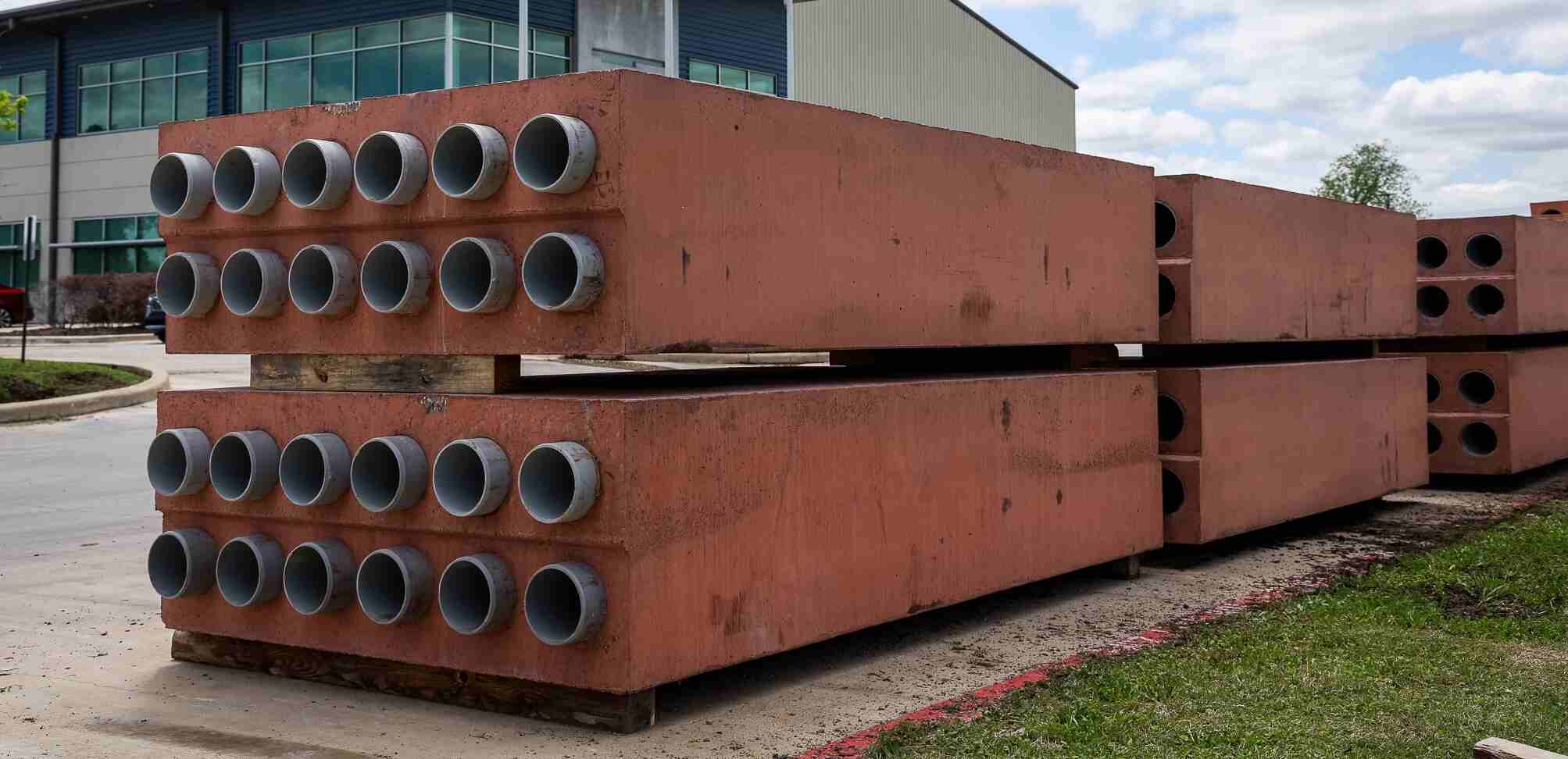
Modern cities depend on strong and safe underground utility systems. We use electricity every day for homes, offices, hospitals, schools, and factories. We also depend on internet and communication networks. All these services require cables that often run underground. To protect these important cables, engineers use a system called a precast duct bank.
In this blog, we will explain in simple and easy English what a precast duct bank is, how it works, why it is important, and why many contractors choose it for construction projects.
What Is a Precast Duct Bank?
A precast duct bank is a group of pipes, also called conduits, that carry electrical or communication cables underground. Workers place these conduits together in a structured arrangement and surround them with reinforced concrete.
The word precast means workers make the concrete structure in a factory before they bring it to the construction site. They do not pour the concrete directly in the trench. Instead, they cast, cure, and prepare the duct bank sections in a controlled factory environment. Then they transport the finished sections to the job site for installation.
This system protects underground cables from damage caused by soil, water, heavy vehicles, and accidental digging.
Why Do We Use a Precast Duct Bank?
Underground cables face many risks. Soil can shift. Water can enter the system. Heavy trucks and cars can press down on the ground above. Construction equipment can accidentally hit buried lines.
A precast duct bank protects cables from these dangers. It keeps cables organized and separated. It also makes maintenance easier because workers can pull cables through the conduits without digging up the entire system.
Cities and contractors use precast duct banks for:
-
Power distribution systems
-
Street lighting systems
-
Traffic signals
-
Communication networks
-
Data centers
-
Airports
-
Hospitals
-
Industrial facilities
Whenever a project requires safe and long-lasting underground cable protection, engineers often choose a precast duct bank.
Main Parts of a Precast Duct Bank
To understand how a precast duct bank works, you need to know its main components.
1. Conduits
Conduits are strong pipes that carry cables. Workers usually make them from:
-
PVC (Polyvinyl Chloride)
-
HDPE (High-Density Polyethylene)
-
Fiberglass
Engineers arrange these conduits in rows and columns, depending on how many cables the project needs.
For example, a small project may need four conduits, while a large data center may require dozens.
2. Concrete Encasement
Concrete surrounds the conduits and protects them from outside pressure. In a precast duct bank, workers pour this concrete in a factory mold. They control the mixing, pouring, and curing process carefully.
Because workers manufacture the system in a factory, they can maintain consistent quality. The concrete becomes strong and durable before it reaches the site.
3. Steel Reinforcement
Workers place steel bars, also called rebar, inside the concrete. The steel increases the strength of the duct bank. It prevents cracking and helps the system handle heavy loads, especially when installed under roads or parking areas.
4. Spacers
Spacers keep the conduits evenly separated. Proper spacing allows heat to escape and prevents the cables from overheating. Spacers also maintain alignment, which makes cable pulling easier.
How Does a Precast Duct Bank Work?
Let us look at how a precast duct bank works step by step.
Step 1: Planning and Design
Engineers start by designing the system. They calculate:
-
How many cables the project needs
-
The size of each cable
-
Future expansion requirements
-
Soil conditions
-
Traffic loads above ground
They design the layout of the conduits and determine how much concrete reinforcement is necessary.
Good planning ensures the system works efficiently for many years.
Step 2: Manufacturing in the Factory
After engineers complete the design, workers begin manufacturing the precast duct bank in a concrete plant.
They follow these steps:
-
They prepare the mold.
-
They place the conduits inside the mold.
-
They add steel reinforcement.
-
They pour high-quality concrete.
-
They allow the concrete to cure properly.
Factory production allows workers to control temperature, moisture, and curing time. This creates a strong and reliable product.
Step 3: Site Preparation
While the factory produces the duct bank sections, construction crews prepare the job site.
They:
-
Dig trenches according to the design
-
Level the bottom of the trench
-
Add bedding material, such as sand or gravel
Proper site preparation ensures the duct bank sits evenly and safely underground.
Step 4: Installation
Workers transport the finished precast sections to the site. They use cranes or lifting equipment to place each section into the trench.
They carefully connect each section to form a continuous system. Because the concrete is already cured, workers do not need to wait for it to harden.
This speeds up the construction process.
Step 5: Cable Installation
After workers install the duct bank, electricians pull cables through the conduits. They use pull boxes or manholes to access the system.
The conduits guide and protect the cables from damage. The concrete encasement shields them from external pressure.
Once workers complete the cable installation, they backfill the trench and restore the surface.
Advantages of a Precast Duct Bank
Many contractors prefer precast duct banks because they offer strong benefits.
1. Faster Construction
Workers install precast sections quickly. They do not need to build forms or wait for concrete to cure on-site. This reduces project time.
2. Better Quality Control
Factory production ensures consistent quality. Workers mix concrete under controlled conditions and follow strict standards.
3. Long-Lasting Durability
Precast duct banks resist:
-
Heavy traffic loads
-
Soil movement
-
Moisture
-
Weather changes
They last for decades with minimal maintenance.
4. Lower Labor Costs
Because workers complete most of the work in the factory, on-site labor requirements decrease. This lowers overall construction costs.
5. Improved Safety
Organized conduits reduce the risk of cable damage. Strong concrete protection lowers the chance of electrical accidents.
Precast Duct Bank vs Cast-in-Place Duct Bank
In traditional systems, workers build the duct bank directly in the trench. They place conduits, install forms, pour concrete, and wait for it to cure.
This method takes more time and depends heavily on weather conditions.
Precast duct banks offer several advantages over cast-in-place systems:
-
Faster installation
-
Less weather impact
-
Higher quality control
-
Reduced on-site delays
-
More predictable scheduling
For large projects, these advantages make a big difference.
Where Do Contractors Use Precast Duct Banks?
Contractors use precast duct banks in many types of projects, including:
-
Highways
-
Commercial buildings
-
Universities
-
Hospitals
-
Airports
-
Industrial plants
-
Utility substations
-
Data centers
Any project that requires safe underground power or communication systems can benefit from this solution.
Important Design Considerations
Engineers must consider several factors when designing a precast duct bank.
Load Requirements
If workers install the duct bank under a road, it must support heavy vehicles.
Heat Dissipation
Electrical cables generate heat. Proper spacing between conduits allows heat to escape.
Water Protection
Engineers design the system to prevent water from collecting inside.
Future Expansion
Engineers often include extra conduits for future cable needs.
Compliance with Codes
Design must follow local electrical and construction standards.
Maintenance of a Precast Duct Bank
Precast duct banks require very little maintenance. However, regular inspections help maintain system performance.
Workers may:
-
Inspect manholes
-
Check for water intrusion
-
Test cable condition
-
Clean debris from access points
Because the concrete structure is strong and reinforced, it rarely requires major repairs.
Why Precast Duct Banks Are a Smart Choice
Construction projects today demand speed, safety, and durability. Precast duct banks meet all these requirements.
They help contractors:
-
Complete projects faster
-
Reduce labor costs
-
Improve safety
-
Ensure long-term reliability
In large infrastructure projects, delays can cost thousands of dollars per day. Precast systems reduce that risk.
Conclusion
A precast duct bank is a strong underground system that protects electrical and communication cables. Workers manufacture it in a factory, transport it to the site, and install it quickly.
The system includes conduits arranged in a structured layout and encased in reinforced concrete. It works by protecting cables from soil pressure, moisture, heavy loads, and accidental damage.