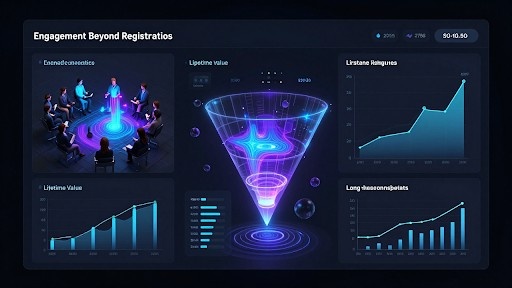
When planning an event, most organizers focus heavily on event registration numbers. How many people signed up? How many tickets were sold? Did we hit our target? While these metrics matter, they only tell part of the story.
Today, successful organizers go far beyond registration data. They look at engagement, attendee behavior, and long-term value. They want to know what happened during the event and what impact it created afterward. That’s where modern event data analytics platforms come into play.
In this article, let’s talk about how event analytics has evolved beyond basic registration and how you can track engagement and lifetime value to truly understand your event’s success.
Registration Is Just the Starting Point
There is no doubt that event registration and event ticketing data are important. They give you your first performance indicators:
- Number of registrations.
- Ticket categories sold.
- Early bird vs. last-minute bookings.
- Revenue generated from ticket sales.
These metrics help you understand demand and pricing strategy. But here’s the truth: registration numbers do not tell you whether attendees were engaged, satisfied, or likely to return.
Someone may register and never attend. Someone may attend but barely participate. Someone may attend, engage deeply, and become a loyal customer. All three show up as one registration. But their value is completely different.
This is why organizers need deeper insights. Thanks to event engagement analytic tools for comprehensive tracking systems.
What Is Event Engagement Analytics?
Event engagement analytics refers to measuring how attendees interact before, during, and after the event. Instead of asking, “Did they register?” you start asking:
- Did they attend live sessions?
- How long did they stay?
- Did they participate in polls or Q&A?
- Did they network with other attendees?
- Did they visit sponsor booths?
- Did they download resources?
These actions give you a clear picture of real involvement. With the help of an advanced event data analytics platform. You can track these touchpoints in real time. This data helps you understand what worked and what did not.
For example:
- If a session had high drop-off rates, maybe the topic was not engaging.
- If a sponsor booth had heavy traffic, you know that category interests your audience.
- If networking activity was high, your audience values connections.
Engagement is the bridge between attendance and long-term loyalty.
Tracking Engagement Across the Event Journey
To truly go beyond registration, you must track engagement across the full event lifecycle.
1. Pre-Event Engagement
Engagement begins even before the event starts. Here’s what you can track:
- Email open rates.
- App downloads.
- Session bookmarking.
- Social media mentions.
- Pre-event surveys.
This early data tells you how excited attendees are. If engagement is low before the event, you may need better communication or content teasers.
Modern event platforms allow you to centralize this information. They connect it with event registration data. This gives you a complete attendee profile.
2. During-Event Engagement
This is where event engagement analytics becomes powerful. You can measure:
- Check-ins through event ticketing scans.
- Session attendance and duration.
- Live poll responses.
- Chat activity.
- Q&A participation.
- Networking meetings booked.
- Exhibitor booth visits.
These metrics show you real-time interest levels. For hybrid and virtual events, tracking is even more detailed. You can measure watch time, replay views, click-through rates, and downloads.
All this data feeds into smarter event ROI measurement. Because you’re not just counting heads, you’re measuring actions.
3. Post-Event Engagement
Many organizers stop tracking after the event ends. This is a big mistake.
Post-event engagement reveals the long-term impact of your event.
You can track:
- On-demand content views.
- Survey responses.
- Social media sharing.
- Follow-up email engagement.
- Conversion to product demos or sales calls.
This is where post-event performance tracking becomes essential. For example, if attendees continue watching recorded sessions weeks later, your content clearly delivered value.
If sponsors receive qualified leads after the event, that strengthens your sponsorship model. Post-event data completes the story.
Measuring the Lifetime Value of Attendees
Now let’s talk about something even more powerful: lifetime value. Lifetime value means understanding how much revenue or impact a single attendee generates over time. It goes far beyond one ticket purchase. With the right event registration platform, you can connect:
- Past event registration history.
- Repeat event ticketing purchases.
- Engagement levels.
- Product purchases.
- Membership upgrades.
- Referral activity.
Imagine you discover that highly engaged attendees are 3x more likely to attend future events. That insight changes how you design your event strategy. Instead of focusing only on attracting new registrations, you focus on nurturing engagement. This is smart event ROI measurement in action.
Why Event ROI Measurement Needs Engagement Data
Traditionally, event ROI measurement was simple: Revenue from tickets minus event costs. But modern events are more complex. You must also measure:
- Sponsor revenue.
- Brand awareness.
- Lead generation.
- Customer retention.
- Community growth.
Without event engagement analytics, ROI calculations are incomplete. Engagement data adds depth to financial metrics. It helps you justify budgets and improve future planning.
Improving Future Events With Post-Event Performance Tracking
The true power of post-event performance tracking lies in continuous improvement. After every event, ask:
- Which sessions had the highest attendance?
- Which speakers drove maximum interaction?
- Where did attendees drop off?
- What feedback themes appear repeatedly?
By combining survey responses with behavioral data from your event engagement analytics, you get accurate answers. For example, attendees may say they loved a session. But if watch time was low, the feedback may not reflect actual behavior. Data gives clarity.
Over multiple events, patterns emerge. You begin to understand your audience deeply. This leads to better programming, stronger sponsor packages, and improved attendee experiences.
The Shift From One-Time Events to Long-Term Communities
Modern events are no longer one-time gatherings. They are part of a broader ecosystem. When you combine event registration, engagement data, and lifetime tracking, you start building a community.
You can:
- Identify brand advocates.
- Reward loyal attendees.
- Create year-round engagement programs.
- Offer memberships or exclusive access.
This approach increases lifetime value and stabilizes revenue. Your event becomes more than a date on the calendar. It becomes an ongoing relationship.
Final Thoughts
Focusing only on event registration numbers is no longer enough. Today’s organizers must think bigger. They must track engagement, measure long-term impact, and understand attendee lifetime value.
With smart post-event performance tracking, you gain clarity. You stop guessing. You start measuring. You move from short-term wins to sustainable growth.
When you combine event ticketing data with engagement insights, you unlock the true potential of your events.
In the end, success is not just about how many people registered. It’s about how deeply they engaged. And how much value they created over time.