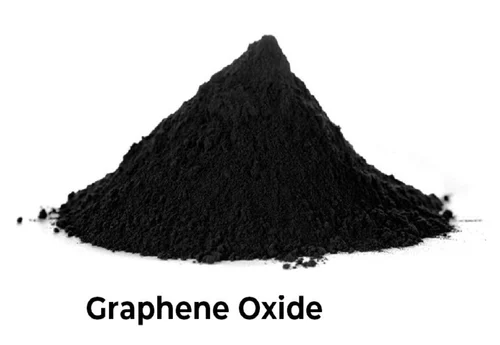
Modern material science continues to evolve rapidly. Researchers constantly search for materials that deliver higher strength, better conductivity, and improved durability. Among advanced nanomaterials, graphene oxide (GO) stands out because of its adjustable chemistry, layered structure, and scalable production.
However, not all GO materials perform the same way. The key difference lies in controlling layer thickness, sheet size, and oxidation level. These structural factors directly affect performance. Therefore, precise control transforms GO from a simple nanomaterial into a reliable engineering solution.
Today, scientists and manufacturers require predictable results. Whether the goal involves membranes, batteries, coatings, or infrastructure materials, structural consistency matters. In this article, we explain how controlled-layer GO is produced, why it matters, and how it supports both research and industrial growth.
Understanding the Layer Structure of Graphene Oxide
GO consists of ultra-thin carbon sheets that contain oxygen-based functional groups. These include hydroxyl, epoxy, and carboxyl groups. Because of these groups, GO behaves differently from pure graphene. The number of layers significantly affects performance. For example:
- Single-layer GO offers a very high surface area and excellent water dispersion.
- Few-layer GO provides better mechanical strength while keeping chemical activity.
- Multi-layer GO increases thickness and changes permeability.
When researchers control layer thickness, they directly influence:
- Electrical conductivity
- Mechanical reinforcement
- Chemical reactivity
- Thermal stability
- Barrier properties
For instance, thinner sheets disperse more easily inside polymers. As a result, composite materials show better tensile strength and crack resistance. On the other hand, thicker layered structures provide stability in stacked membrane systems. Therefore, controlling layer structure ensures the material performs exactly as intended.
How is Controlled Layer Structure Achieved?
Manufacturers manage several production variables to control layer structure. Each step influences final thickness and performance.
- First, oxidation plays an important role. Controlled oxidation increases the spacing between graphite layers. This makes exfoliation easier. However, too much oxidation weakens structural strength. Therefore, producers must maintain a careful balance.
- Second, exfoliation methods separate layers. Ultrasonic treatment and mechanical stirring break down graphite into thinner sheets. By adjusting energy levels and time, manufacturers control whether they produce single-layer or few-layer materials.
- Third, centrifugation helps sort sheets based on size and thickness. Because sheets settle at different speeds depending on weight and density, separation becomes possible.
- Finally, drying techniques affect restacking. Rapid drying reduces aggregation. Slow evaporation may allow partial restacking. Consequently, production control directly shapes final material behavior.
Through these optimized steps, suppliers deliver GO tailored for research labs, coating systems, and industrial composites.
Scientific Applications: Precision at the Nanoscale
Controlled-layer GO plays a major role in scientific research. Reproducibility is essential in laboratories. Without structural consistency, results vary.
Membrane Technology
In filtration systems, interlayer spacing determines selectivity. Thin sheets form nanochannels that regulate water flow while blocking contaminants. Because spacing can be adjusted, researchers design membranes for desalination, gas separation, and solvent purification.
For example, thinner layers increase permeability. Meanwhile, controlled stacking improves rejection rates. Therefore, scientists can fine-tune membrane performance instead of relying on trial-and-error testing.
Energy Storage Research
Energy devices require materials that balance conductivity and chemical functionality. Few-layer GO provides active surfaces for ion storage while maintaining structural stability.
In lithium-ion battery research, layer control improves electron transport pathways. Additionally, when GO is reduced into conductive forms, the initial sheet quality affects final conductivity. Therefore, structural consistency leads to more reliable device performance.
Biomedical and Surface Studies
GO contains functional groups that allow chemical modification. Controlled layers ensure a predictable surface area. This directly impacts drug loading efficiency and biomolecule attachment. In addition, stable dispersion in aqueous solutions improves interaction with cells and biological media during experimental procedures.
Furthermore, uniform sheet thickness reduces variability in cytotoxicity experiments. As a result, researchers obtain safer and more consistent biological data. This consistency also supports regulatory evaluation, reproducible dosing studies, and long-term biocompatibility assessments in advanced biomedical research applications.
Industrial Applications: Scaling Performance with Confidence
While research focuses on precision, industry demands durability and scalability. Controlled-layer GO meets both requirements.
Polymer and Composite Reinforcement
Manufacturers add GO into epoxy, polyurethane, and thermoplastics to improve strength. Few-layer sheets disperse evenly and bond strongly with polymer chains.
Even small percentages can increase tensile strength and improve crack resistance. In addition, better dispersion reduces agglomeration, which normally weakens materials.
Protective Coatings and Barrier Films
Layered GO structures create tortuous diffusion paths. These paths slow moisture and gas penetration. Consequently, coatings become more resistant to corrosion.
Barrier films also benefit from reduced oxygen transmission. Because layer alignment controls diffusion behavior, thickness precision remains essential.
Cement and Infrastructure Materials
Concrete and asphalt industries use GO to control microcracks and refine microstructure. Thin sheets interact with hydration products, which improves internal bonding.
As a result, compressive strength and long-term durability increase. Moreover, consistent layer size ensures predictable performance in large-scale construction projects.
Practical Tips for Selecting Controlled-Layer GO
Choosing the right material requires careful evaluation. Follow these steps:
- Define your main objective. Decide whether you need conductivity, reinforcement, barrier performance, or chemical activity.
- Review technical data. Reliable suppliers provide thickness distribution analysis.
- Balance sheet size and layer count. Larger sheets increase strength, while smaller sheets disperse more easily.
- Perform small-scale testing. Uniform dispersion often predicts better performance.
If reduction is required, ensure the material maintains integrity after treatment.
By following these guidelines, researchers and engineers reduce risk and improve material efficiency.
Final Words
Graphene Oxide with controlled layer structure delivers reliability, not just advanced properties. When manufacturers precisely manage thickness, oxidation level, and sheet distribution, they create consistent and scalable performance. This level of precision reduces batch variation and improves long-term material stability across demanding environments.
This control allows GO to move beyond laboratory experimentation and into real industrial applications. Researchers benefit from reproducible data, faster validation cycles, and predictable surface chemistry. Industries benefit from stronger, more durable materials that integrate smoothly into existing production systems.
As demand for high-performance nanomaterials grows, controlled-layer GO will continue to support innovation across energy storage, protective coatings, advanced composites, water treatment systems, and infrastructure development worldwide.