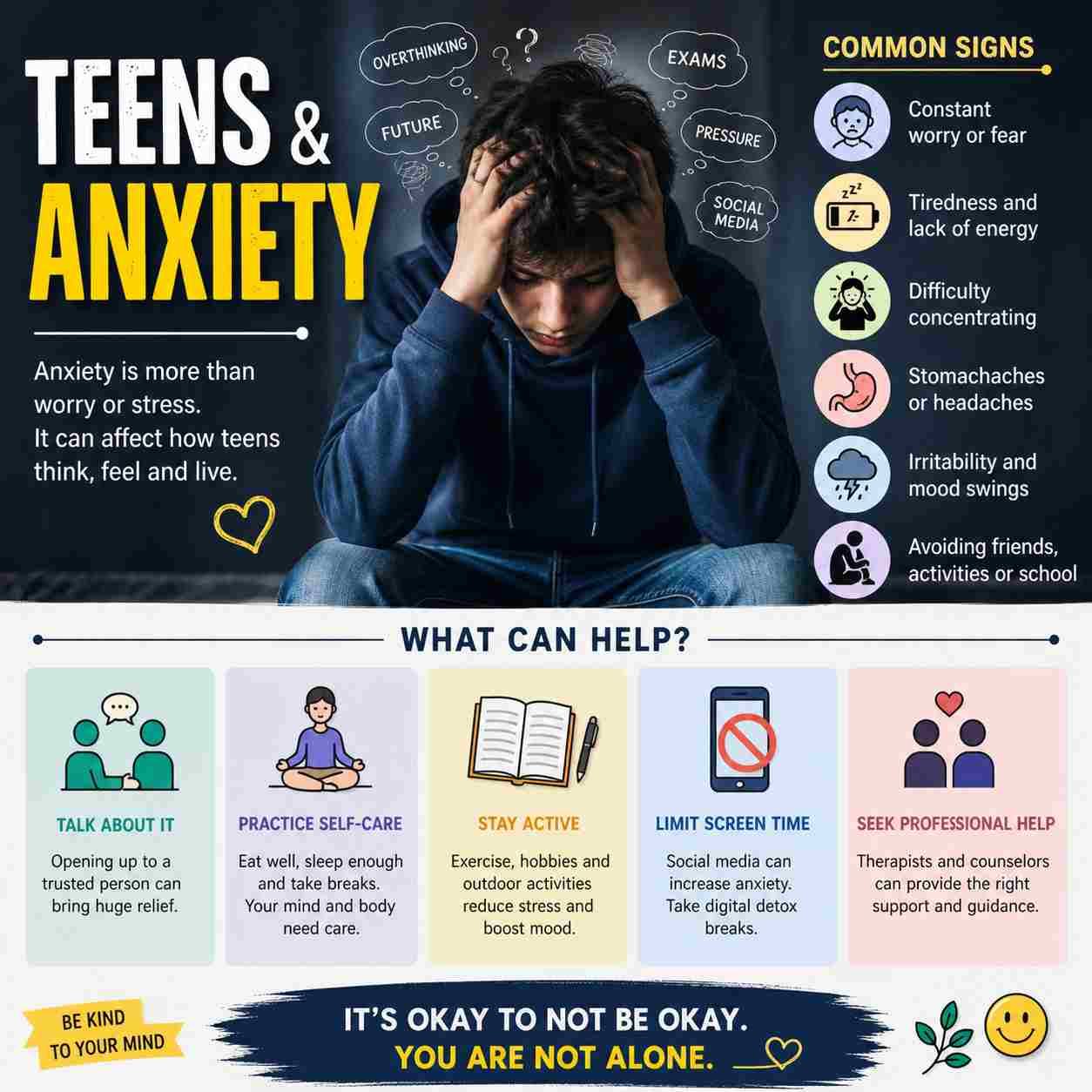
Anxiety shows up in ways you might not expect: slipping grades, sudden withdrawal, or constant restlessness instead of obvious panic. You can learn to spot those warning signs and use practical, evidence-based strategies to help a teen move from surviving to coping.
This post on teens and anxiety will help you recognize subtle changes in behavior, understand what’s behind them, and take clear actions that protect mental health. Expect concise, usable steps you can apply right away to support a teen through school stress, social pressure, or persistent worry.
Recognizing Signs of Anxiety in Adolescents
You can spot anxiety through changes in feelings, body symptoms, school work, and friendships. Noticing specific shifts—like avoidance of activities, frequent stomachaches, or sudden drops in grades—helps you decide when to offer support or seek professional help.
Emotional and Behavioral Indicators
Watch for persistent worry that goes beyond normal concern—rumination about tests, future events, or social rejection that lasts weeks and affects daily decisions. Your teen may avoid places or people, cancel plans repeatedly, or show extreme reassurance-seeking, asking the same questions about safety or performance.
Mood changes often appear as irritability, tearfulness, or emotional outbursts that seem disproportionate to the situation. You might also see increased perfectionism, rigid routines, or difficulty tolerating uncertainty. Note if these behaviors reduce participation in hobbies or family activities they formerly enjoyed.
Physical Manifestations
Physical signs commonly include headaches, stomachaches, muscle tension, rapid heartbeat, sweating, or shortness of breath without an obvious medical cause. These symptoms often appear before or during stressful events like school presentations, social situations, or tests.
Sleep and appetite changes are frequent: trouble falling asleep, restless sleep, early waking, or eating much less or more than usual. Track symptom patterns—if physical complaints spike on school days or before social events, anxiety is a likely contributor worth addressing.
Academic and Social Impacts
Anxiety often shows in school through declining grades, missed assignments, frequent absences, or difficulty concentrating during class. Your teen may report that their mind “goes blank” during tests or that they dread specific subjects or teachers without clear reasons.
Socially, expect withdrawal from friends, reluctance to join group activities, or fear of judgment that leads to silence in class and limited peer interaction. Bullying, peer rejection, or the stress of social media can intensify anxiety; notice if online interactions trigger strong emotional responses or avoidance of social settings.
Strategies for Supporting Teen Mental Health
You can reduce a teen’s anxiety by building practical coping skills, improving daily routines, and using clear, calm communication. Know when symptoms need professional care and how to find appropriate help quickly.
Effective Coping Techniques
Teach specific breathing and grounding exercises you can practice together. Try the 4-4-4 box breathing (inhale 4s, hold 4s, exhale 4s) and a 5-4-3-2-1 grounding checklist (name 5 things you see, 4 you can touch, etc.) to interrupt panic or high worry.
Encourage structured activity: regular sleep (bedtime within 60 minutes nightly), 30–60 minutes of moderate physical activity most days, and scheduled breaks from screens. These habits lower physiological arousal that fuels anxiety.
Offer short, concrete behavioral strategies like “start homework for 15 minutes” when avoidance feels overwhelming. Use brief exposure steps for specific fears—small, repeated tasks that build confidence. Reinforce progress with praise for effort rather than outcomes.
Communication Approaches for Parents and Caregivers
Begin conversations with open, nonjudgmental prompts: “What happened today that felt hard?” Use reflective listening—repeat what you heard and ask one clarifying question. This reduces defensiveness and helps you understand triggers.
Set calm boundaries around problem-solving. Ask permission before giving advice: “Would you like ideas, or do you want me to listen?” Offer two practical options rather than a long lecture to keep it manageable.
Use specific support statements: “I notice you’ve been sleeping less; do you want help adjusting your routine?” Avoid vague reassurances like “don’t worry.” Schedule regular check-ins and keep discussions short and predictable so your teen knows support is consistent.
When to Seek Professional Help
Seek professional help if anxiety disrupts school attendance, social life, eating or sleeping for more than two weeks, or if coping strategies no longer help. Immediate evaluation is needed if your teen talks about self-harm, hopelessness, or shows severe withdrawal.
Start with a primary care visit to rule out medical causes and obtain referrals to a pediatric psychologist or psychiatrist. For therapy, look for cognitive behavioral therapy (CBT) trained clinicians experienced with teens; ask about evidence-based anxiety treatment and session length.
If risk is immediate, contact local emergency services or a crisis line. For non-urgent needs, ask about telehealth options, sliding-scale clinics, or school-based mental health services to find timely, affordable care.