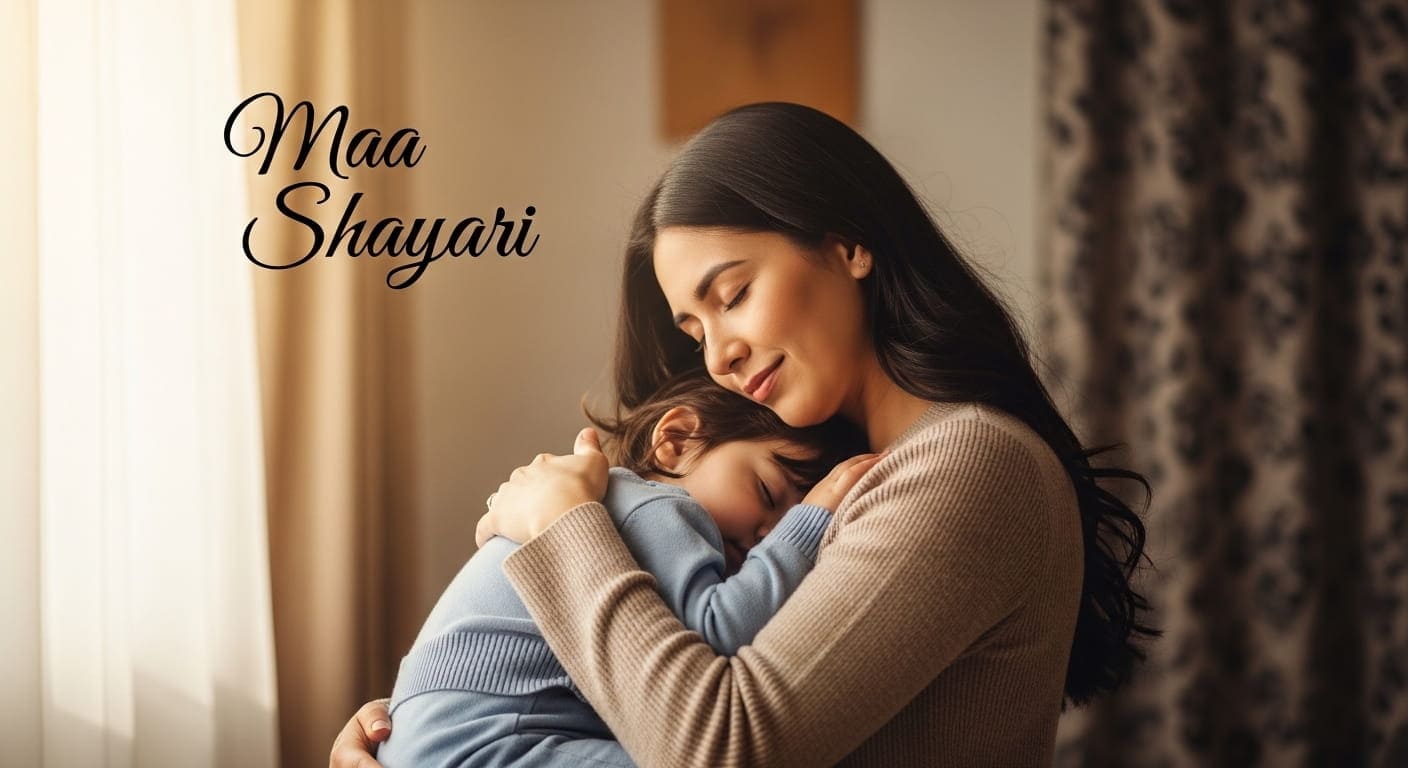
A mother is the first friend, the best guide, and the most unshakable support in life. She is the heart that beats for her children, the hand that steadies them in moments of doubt, and the voice that whispers wisdom even when words are unspoken. Across cultures and languages, mothers hold a sacred place in every heart. In poetry and literature, the essence of a mother’s love has been captured beautifully through Maa Shayari a form of poetry that expresses love, gratitude, longing, and the deep emotional bond between a mother and her children.
The Significance of Maa Shayari
Shayari is not just poetry; it is an art that conveys profound emotions in a few lines. When it comes to Maa Shayari, the words resonate with universal emotions—care, sacrifice, understanding, and unconditional love. Unlike ordinary poetry, Maa Shayari has the power to make readers pause, reflect, and even bring tears to the eyes. It speaks to the soul, reminding us of the warmth of a mother’s embrace and the countless sacrifices she makes for her children.
A simple line of Maa Shayari can make someone remember waking up to her gentle voice, her encouraging words in times of failure, or her silent prayers for their happiness. The emotions in Maa Shayari are raw, real, and timeless.
Themes Explored in Maa Shayari
-
Sacrifice and Unconditional Love
One of the most common themes in Maa Shayari is a mother’s selfless love. These shayaris reflect how a mother puts her children above herself, often sacrificing her own comfort, dreams, and desires. Through these lines, readers can understand the depth of her love without needing any direct explanation. -
Nostalgia and Longing
Many Maa Shayaris evoke a sense of nostalgia, taking readers back to childhood memories. Whether it’s the warmth of a mother’s hug during sickness, the gentle touch on a scraped knee, or the comforting presence during sleepless nights, Maa Shayari has the power to rekindle these cherished moments. -
Guidance and Wisdom
Mothers are the first teachers in a child’s life. Some Maa Shayaris focus on their guidance—teaching morals, instilling courage, and preparing children to face life’s challenges. These poetic lines often carry deep philosophical meaning, inspired by the life lessons a mother imparts. -
Gratitude and Reverence
Maa Shayari also expresses gratitude towards mothers, acknowledging their unwavering support and love. It reminds us to cherish them while we can, to express our love and appreciation before it’s too late.
Examples of Heart-Touching Maa Shayari
Here are a few examples of Maa Shayari that beautifully capture the essence of a mother’s love:
-
“Maa ke haathon mein basi hai duaon ki khushboo,
Har aansu pe uski mohabbat ka hai roop.”
(In a mother’s hands lies the fragrance of prayers,
Every tear reflects her love.) -
“Maa ka pyar ek aisa dariya hai,
Jismein bachpan ke sapne doobte aur jeete hain.”
(A mother’s love is like a river,
In which childhood dreams sink and rise again.) -
“Har khushi mein maa ka haath hai,
Har gham mein maa ki saath hai.”
(In every joy, there is a mother’s hand,
In every sorrow, her companionship.)
These shayaris may be short, but they carry immense emotional weight, striking a chord with anyone who has experienced a mother’s affection.
Why Maa Shayari Touches Hearts
The reason Maa Shayari resonates so deeply is that it speaks a universal language. Regardless of culture or language, everyone has a mother figure—whether it’s a biological mother, a guardian, or someone who has nurtured them. The emotions portrayed in Maa Shayari—care, concern, sacrifice—are understood intuitively. The brevity of shayari allows a few words to carry a depth that novels or long poems sometimes cannot achieve.
Moreover, Maa Shayari can also serve as a source of comfort. For someone missing their mother, these lines act as a reminder of her presence in spirit. For children, it’s a reminder of the debt of love and gratitude we owe to the person who gave us life and nurtured us.
Celebrating Maa Shayari in Daily Life
In today’s digital age, Maa Shayari has found a place on social media, greeting cards, and even as voice notes. Sharing a Maa Shayari on Mother’s Day, a birthday, or any ordinary day has become a popular way to express love. Many people also write their own shayaris, capturing personal memories and feelings, making them unique and heartfelt.
Parents, teachers, and poets encourage children to read and even compose Maa Shayari. It is a creative exercise that not only improves language skills but also cultivates empathy, gratitude, and emotional intelligence. Through writing or reading Maa Shayari, one learns to value relationships and understand the unspoken sacrifices of mothers.
The Timeless Connection
A mother’s love is eternal, and so is Maa Shayari. Even when words fail, these poetic expressions manage to articulate what is often felt but never spoken. They become a bridge connecting generations, allowing grandchildren to understand their grandmother’s love or reminding adults of their own childhood.
Maa Shayari also teaches an important life lesson: love and care are universal languages that transcend time, distance, and circumstances. Whether it’s a gentle reminder of a mother’s smile, a note of gratitude, or a poetic homage to her sacrifices, Maa Shayari immortalizes these emotions, ensuring they are never forgotten.
Conclusion
Maa Shayari is more than just poetry; it is a tribute, a celebration, and an emotional reflection of one of life’s purest relationships. Every line carries warmth, every word resonates with love, and every couplet reminds us of the priceless gift we have in our mothers.
Whether you read it, write it, or share it, Maa Shayari has the power to make us pause, reflect, and cherish the woman who gave us everything without expecting anything in return. So, the next time you see your mother, hug her a little tighter, whisper a word of thanks, or share a beautiful Maa Shayari—you are honoring her in the most heartfelt way possible.