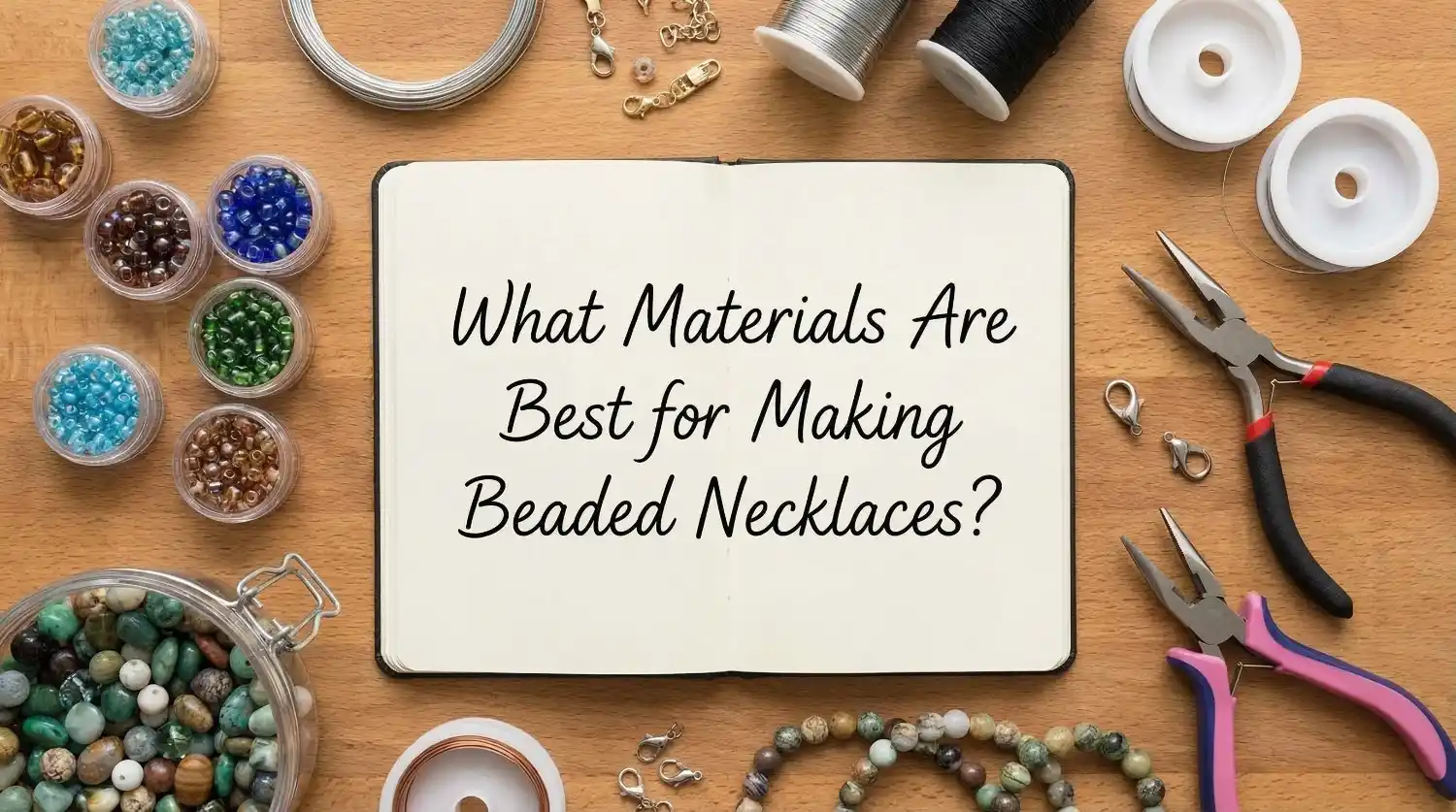
If you’ve ever walked into a craft store and felt overwhelmed by the sheer number of bead options, you’re not alone. Choosing the right materials can make or break your project. Whether you’re a beginner or someone with years of experience, understanding what goes into making beaded necklaces is the first step toward creating something beautiful that actually lasts. The good news is that once you know the basics, picking materials becomes a lot easier and even fun.
Understanding Bead Types for Beaded Necklaces
Beads exist in different forms, which include multiple shape and size dimensions and various material types. The various bead types create distinct appearances and tactile sensations for your final product. We will examine the most common choices from the existing options.
Jewelry makers consider glass beads to be their preferred choice for multiple valid reasons. The substance provides designers with access to about 1000 different design options, which include multiple color choices and finishing techniques and various design shapes. Seed beads function as tiny glass beads, which suit detailed pattern work and complex design projects. Czech glass beads and Murano glass beads create a higher-quality appearance compared to standard glass beads. The material captures light rays in a unique way that plastic materials cannot mimic.
Any design component receives an organic element through the incorporation of stone beads. Think about turquoise and amethyst and jade and rose quartz. The necklace gains a noticeable weight from these beads, which creates a heavier presence around the wearer’s neck. The materials possess strong protective qualities. Stone beads provide a reliable option for polished-looking designs that do not contain any eye-catching elements.
Wooden beads create a breezy and artistic fashion atmosphere. The products provide multiple size options through their lightweight material, which maintains an accessible price point. People can find these products in their natural state or after they have been painted and dyed. The products function as perfect materials to create both important fashion designs and everyday casual styles.
Swarovski crystal beads function as fashionable elements that enhance your look through their shimmering effect. The products suit both formal jewelry designs and any pieces that require high visibility. The material costs more than other options, but its brilliance exceeds everything else.
Beads and spacers create a combination of texture and visual separation. Silver and gold and brass and copper beads create visual breaks that introduce glimmering elements among other bead designs. The items provide your designs with an authentic professional appearance, which creates a polished final result.
Choosing the Right Stringing Material
The beads receive primary attention, but the elements that keep them together hold equal importance. Beads break when the wrong stringing materials get used, which creates problems, while losing beads leads to scattered pieces throughout the room.
The most widely used beading wire exists as a standard option. The product consists of very thin steel wires that receive nylon protection. The product combines flexible qualities with high strength, which allows it to work with various bead types. Bead products from Beadalon and Soft Flex come in multiple strand designs. Increased strand count provides higher flexibility, which results in improved draping capabilities. The wire design functions perfectly for all projects through its 19- and 49-strand configuration.
Nylon thread, like Nymo or C-Lon, is best for seed bead work and bead weaving. The material has a thin design, which enables it to go through small bead openings multiple times. The thread needs a beading needle for standard operation. The heavy beads become unmanageable through this material because it stretches with time.
Stretch cord, often made from elastic, is great for bracelets and simple necklaces without clasps. Beginner users will find the product to be user-friendly because of its straightforward design. The material does not last as long as its counterparts, which makes it unsuitable for long-lasting products.
Silk thread represents the standard choice used for creating knots between pearls and gemstone beads. The material creates a timeless, sophisticated appearance. The knotting method between beads functions as a protective measure that keeps beads from hitting each other and stops all beads from spreading out if the thread gets cut.
Designers use leather and cotton cord materials to create their casual and rustic design collections. The design allows users to directly string larger beads or create a foundation for pendant-style neck design. The products create unique character elements that harmonize with wooden and bone and ceramic bead designs.
Findings and Finishing Components
The hardware elements of findings complete the construction of your necklace. The products include clasps and jump rings and crimp beads and bead tips for different uses.
Lobster claw clasps function as the most frequently used fastening solution. The solution enables people to secure their items through a user-friendly locking system. Toggle clasps function as decorative hardware that provides support for massive objects. Magnetic clasps enable users to fasten their products quickly while the fastener system provides insufficient security against expensive items.
The process of working with beading wire requires crimp beads and crimp tubes as fundamental requirements. The user employs the tool to attach the wire on the clasp. The process requires crimping pliers for effective execution because they provide clear results.
Jump rings function as the connectors that link clasps to your necklace chain. The selection process requires you to find items that match the appearance of your metal beads and spacers.
Tips for Picking the Right Materials
Begin the process by visualizing your desired outcome. Think about who will wear the necklace and when. The materials used in an everyday necklace need to withstand daily usage. The design needs to include crystals or gemstones for special events.
The weight needs to be evaluated. The heavyweight stone beads require high-strength stringing materials for their proper handling. The construction of lightweight glass and wooden beads enables users to choose any type of stringing method.
The people who use your product might develop skin reactions to its contents. Certain metals, especially nickel, create allergic reactions in specific individuals. The jewelry designer needs to select hypoallergenic materials, which include sterling silver and stainless steel and gold-filled findings, when creating jewelry for other people.
Invest in high-quality materials whenever you have the opportunity. Inexpensive beads and findings will result in tarnishing and breakage and fading over time. You can obtain high-quality products without a substantial investment, but spending slightly more money will enhance your end result.
Wrapping It Up
Making beaded necklaces is a rewarding craft that blends creativity with personal style. The materials you choose shape everything, from how the necklace looks to how long it lasts. Glass, stone, wood, crystal, and metal beads each bring something different to the table. Pair them with the right stringing material and quality findings, and you’ll create pieces worth wearing and sharing. Start simple, experiment often, and let your hands learn what works best for you.