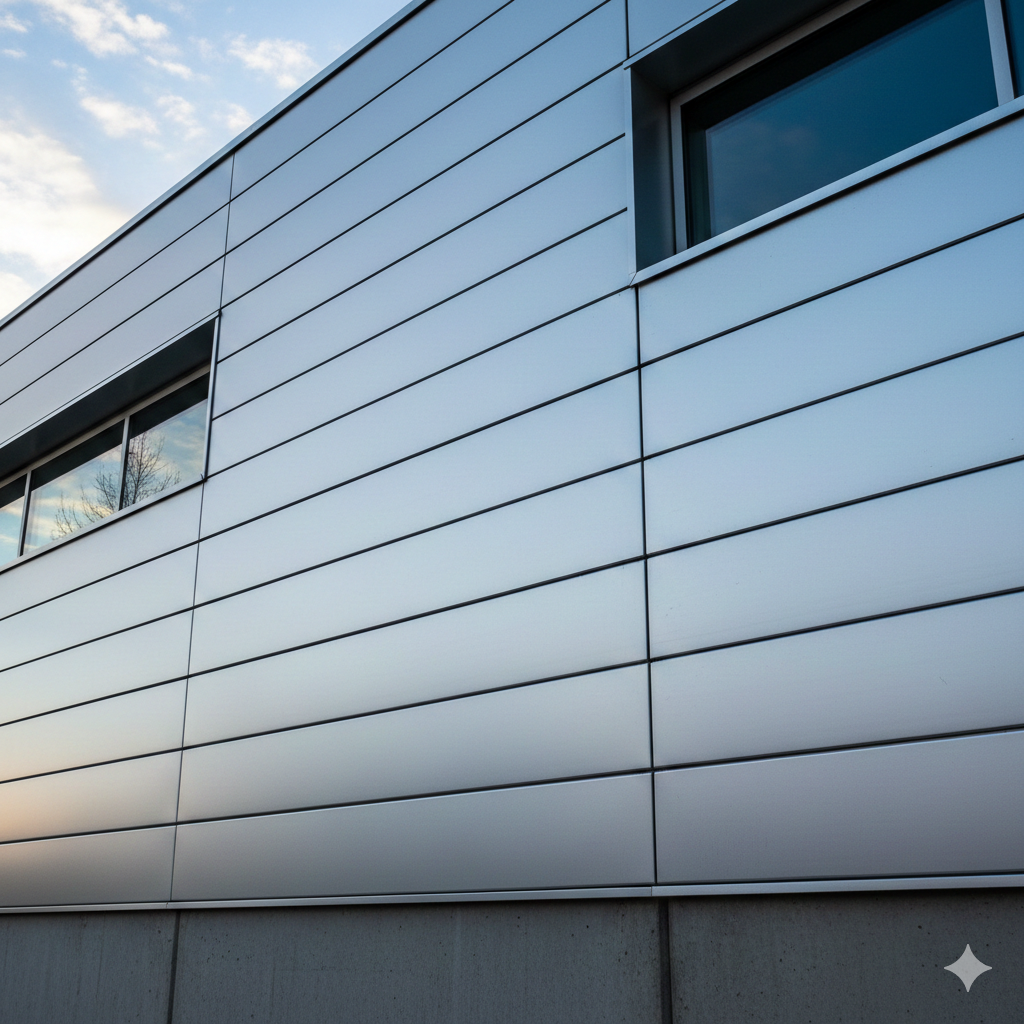
Aluminum composite wall panel gives you a lightweight, durable cladding option that balances clean aesthetics with practical performance. You can achieve sleek, weather-resistant façades and interior walls with panels that combine thin aluminum skins and a stable core, offering design flexibility, low maintenance, and quicker installation than many traditional materials.
This post will show how these panels work, where they perform best, and what to expect during installation so you can quickly decide if they fit your project goals. Dive in to learn the key properties, common applications, and installation considerations that matter most to architects, contractors, and building owners.
Aluminum Composite Wall Panel Overview
Aluminum composite wall panels combine thin aluminum skins with a lightweight core to deliver flat, durable cladding that simplifies installation and design. You’ll find variations in core composition, panel thickness, and surface finish that directly affect fire performance, weight, and visual outcome.
Core Materials and Structure
Aluminum composite panels are sandwich panels with two pre-painted or coated aluminum sheets bonded to a continuous core.
Common core types include polyethylene (PE), fire-retardant mineral-filled (FR), and non-combustible mineral cores. PE cores are lightweight and cost-effective but have limited fire resistance. FR cores use mineral fillers or modified polymers to improve fire performance and meet stricter codes. Non-combustible cores (e.g., mineral wool or thermally set mineral cores) provide the highest fire ratings required for many high-rise facades.
Panel thickness typically ranges from 3 mm to 6 mm total, with aluminum skins commonly 0.3–0.5 mm thick each.
You should specify core type and skin thickness together, because both determine panel weight, rigidity, and compliance with building regulations.
Key Properties and Performance
ACP delivers a strong flatness-to-weight ratio: it stays dimensionally stable while remaining light enough for faster installation.
You’ll see improved impact resistance and weather durability compared with single-sheet cladding when skins are properly coated.
Thermal expansion, wind load capacity, and fastener detailing affect long-term performance. Coatings—PVDF or FEVE—enhance UV resistance and color retention.
Fire performance hinges on the core choice; only panels with FR or non-combustible cores meet stringent façade fire codes in many jurisdictions. Acoustic insulation is modest unless paired with additional backing or cavity insulation.
Types and Finishes
Manufacturers offer several panel types: standard ACP with PE core, fire-rated ACP (FR), and insulated or structural variants with thicker cores or bonded insulation.
Panel formats include flat sheets, routed profiles, and pre-formed shapes for corners and reveals.
Finishes range from solid PVDF-painted colors and metallics to anodized, woodgrain, and textured coatings.
You can select high-gloss, matte, or custom color matching; choice affects maintenance and glare. Perforated or micro-ribbed options exist for acoustics and ventilation.
Applications and Installation
Aluminum composite wall panels serve as both exterior cladding and interior finishes where you need weather resistance, clean lines, and low maintenance. You’ll find them on high-rise facades, retail storefronts, soffits, and interior feature walls.
Architectural and Commercial Uses
You can use aluminum composite panels (ACPs) for exterior curtain walls, parapet cladding, and column covers on commercial buildings. They provide a flat, uniform façade that supports long horizontal or vertical runs, conceal joints, and accept shop-applied coatings or digital prints for branding.
Use ACPs for storefronts, canopies, and signage where impact resistance and crisp color retention matter. In interiors, you can apply them as elevator surrounds, reception backdrops, and partition panels because they resist stains and are easy to clean. Choose panel thickness, core type (PE or fire-rated mineral), and finish (PVDF, PE, anodized) based on local code and exposure.
Installation Methods
You should start with a square, plumb framed substrate—steel studs or aluminum framing are standard. Fastening methods include visible-face screws, concealed Z-clips, and SFS (steel framing system) with continuous rails; select the method to accommodate thermal movement and wind loads.
Seal joints with backer rod and NFPA-accepted sealants, and leave expansion gaps per manufacturer specs (typically 8–12 mm). For rainscreen assemblies, install a drained-air cavity and weather barrier behind the panels to prevent moisture ingress. Use rivets or self-tapping screws with neoprene washers on aluminum rails for long-term corrosion control.
Maintenance Practices
You should inspect panels annually for sealant failure, fastener corrosion, and coating damage. Clean dirt and pollutants with a mild detergent and low-pressure wash; avoid abrasive pads or solvents that can damage PVDF finishes.
Repair small scratches with manufacturer-matched touch-up paint and replace panels showing delamination or core damage. For joints, remove failed sealant and reseal using compatible materials; document maintenance dates and product data to simplify warranty claims.