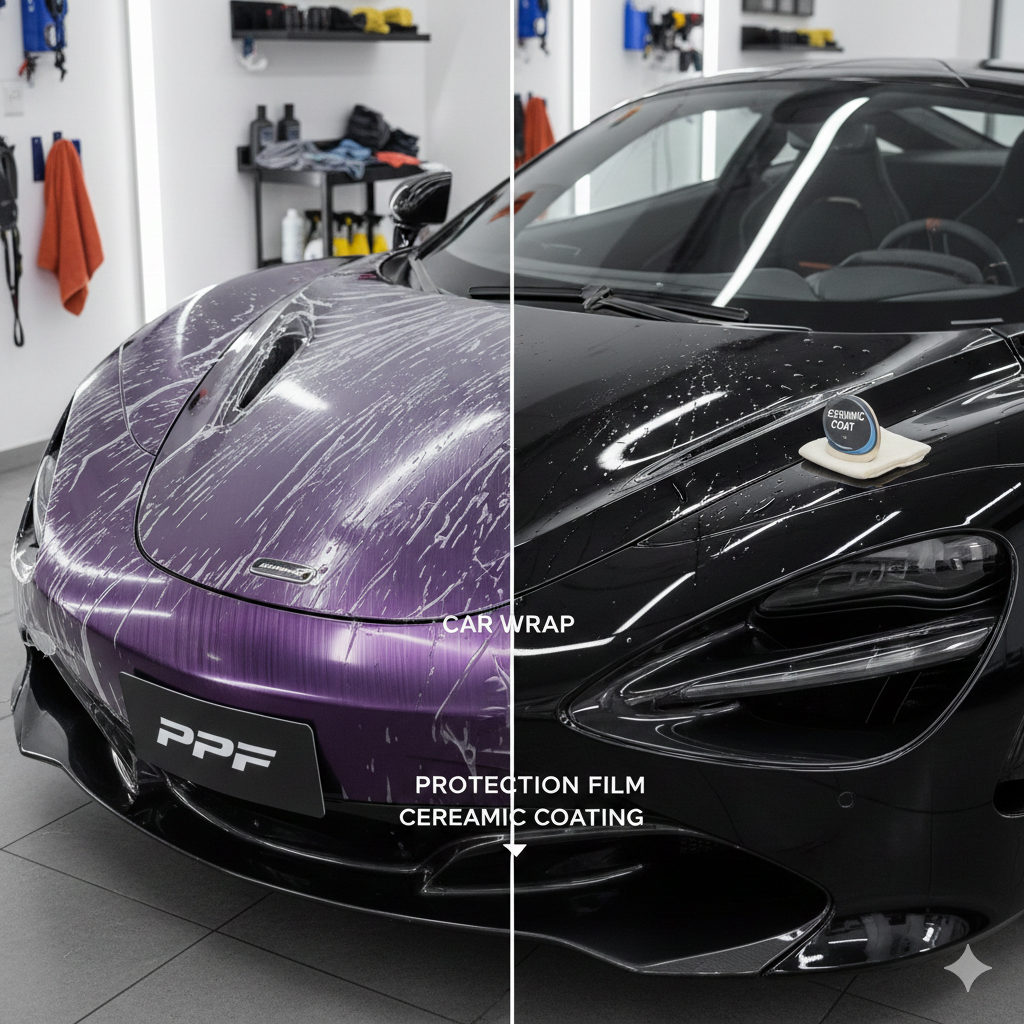
You want your car to look newer, resist stains, and spend less time on upkeep. Ceramic coating gives durable hydrophobic protection and gloss that outlasts conventional wax, so your paint resists water spotting, light contaminants, and routine wear while you spend less time polishing.
If you value long-lasting protection and easier cleaning, a professional or properly applied DIY ceramic coating can deliver measurable benefits for years.
This article explains how ceramic coatings work, the practical benefits and limits you should expect, and what the application and maintenance process actually involves so you can decide whether it fits your budget and goals.
Benefits and Functionality of Ceramic Coating Car
Ceramic coating car provides long-term paint protection, improves water and dirt repellency, and enhances gloss without frequent reapplication. You’ll get a chemically bonded layer that resists UV, minor contaminants, and makes washing faster.
Protection Against Environmental Damage
Ceramic coating forms a hard, transparent layer that chemically bonds to your factory paint. This layer reduces UV oxidation, slowing clearcoat fading and paint chalking that normally occur from sun exposure.
It also resists chemical etching from bird droppings, tree sap, and acid rain better than waxes. While it won’t make your paint impervious to heavy mechanical scratches, it minimizes light swirl marks from routine washing and provides an extra barrier against road grime and contaminants.
Maintenance matters: paint correction before application ensures the coating bonds to a smooth surface, and periodic decontamination restores protective performance.
Hydrophobic Properties and Ease of Cleaning
The coating creates a low-surface-energy finish that causes water to bead and sheet off quickly. Beading reduces water spots and makes rinsing away dirt simpler during routine washes.
Hydrophobicity also limits how strongly contaminants stick, so contaminants like brake dust and light mud rinse off with less agitation. You’ll still need to wash your car regularly and use proper techniques to avoid swirl marks, but overall washing time and frequency drop compared with uncoated paint.
Note that hydrophobic performance varies by product and can diminish over time; booster applications or maintenance washes with pH-neutral cleaners help maintain repellency.
Enhanced Gloss and Appearance
Ceramic coatings add a deep, reflective gloss by filling microscopic paint imperfections and creating a uniformly smooth surface. That “wet” look comes from improved light reflection and sustained clarity of the clearcoat.
You’ll notice richer color depth and a slick feel that persists longer than traditional wax or sealant. The visual impact depends on paint condition prior to application—performing paint correction before coating maximizes gloss and hides fine defects.
Different formulations deliver varying levels of depth and clarity, so choose a reputable product or professional installer for consistent, high-quality results.
Application Process and Maintenance
You’ll need meticulous surface prep, a controlled application environment, and a regular maintenance routine to get the full protection and gloss from ceramic coating. Prep removes contaminants and corrects defects; application method affects durability; routine washing and periodic inspections preserve performance.
Surface Preparation Steps
Start by washing your vehicle with a pH-neutral car shampoo and two-bucket method to remove loose dirt without marring the paint. Decontaminate with clay or a chemical decon product to remove embedded iron and tar particles that will telegraph through a coating.
Inspect paint under bright, angled light and correct swirls or scratches with machine polishing when necessary; coatings lock in whatever finish exists at time of application. After polishing, wipe panels with an isopropyl alcohol (IPA) or panel wipe to remove oils and polishing residue.
Work panel by panel in a dust-free, shaded space with ambient temperature 15–25°C (59–77°F). Use lint-free applicators and microfiber towels, and avoid silicone-containing products before coating.
Professional vs DIY Application
A professional detailer offers paint correction, climate-controlled booth application, and multi-layer ceramic systems with warranties. You get trained technicians, insurance for mistakes, and longer-lasting results that justify higher cost if your paint needs correction.
DIY kits cost less and suit vehicles with near-perfect paint and small budgets. Expect single-layer coverage, more time per panel, and higher risk of high spots if you rush. Choose a reputable kit, practice on a test panel, and follow cure-time guidance precisely.
If you value warranty-backed durability and have visible defects, choose pro service. If you can commit to careful prep and slow, patient application, DIY can deliver solid protection for several years.
Maintenance Tips for Longevity
Wash your coated car every 1–2 weeks using pH-neutral shampoo and soft mitts; avoid automatic brushes and abrasive brushes that can abrade the coating. Use the two-bucket method and a grit guard to reduce swirl risk.
Rapid detailers formulated for ceramic coatings can refresh hydrophobic properties between washes. Reapply a spray-on maintenance product every 2–6 months depending on exposure and product instructions.
Avoid harsh solvents, high-pH cleaners, and abrasive compounds. Inspect the coating semiannually for water beading and tone changes; schedule professional reapplication or topper layers when hydrophobicity and gloss noticeably decline.