Keeping an abandoned vehicle on your Sydney property incurs hidden costs ranging from local council fines and property devaluation to significant environmental remediation expenses and pest control fees. While a stationary car appears harmless, it functions as a liability that depreciates your land value and attracts legal scrutiny from New South Wales authorities.
Deciding to let an old “project car” or a deceased relative’s vehicle sit in the driveway often seems like the easiest path. However, the financial and legal reality in Greater Sydney suggests otherwise. Understanding these specific burdens allows property owners to make informed decisions before a minor eyesore becomes a major financial drain.
1. Financial Penalties and Council Fines
Sydney local councils enforce strict “Protection of the Environment” and “Abandoned Vehicle” bylaws to maintain suburban amenity and safety. Leaving a vehicle that is unregistered, stripped of parts, or clearly undriveable on a nature strip or visible private land triggers inspections and subsequent fines.
To avoid council penalties, residents must either keep vehicles in a fully enclosed garage or maintain active registration. In areas like the Inner West or Northern Beaches, 3 specific types of notices are commonly issued:
-
Notice of Intention to Levy a Fine: A preliminary warning giving owners 7 to 14 days to move the vehicle.
-
On-the-spot Infringement Notices: Fines ranging from $200 to $2,000 depending on the severity of the obstruction or environmental risk.
-
Towing and Storage Fees: If the council impounds the vehicle, owners face daily storage rates of $50 to $100 plus the initial $300 towing fee.
| Penalty Type | Estimated Cost (AUD) | Authority |
| Initial Infringement | $200 – $600 | Local Council (e.g., City of Sydney) |
| EPA Pollution Fine | $1,500 – $8,000 | NSW Environment Protection Authority |
| Impound Release Fee | $300 + Daily Storage | Contracted Impound Yards |
2. Rapid Property Devaluation
Abandoned vehicles decrease the “kerb appeal” and market valuation of a Sydney home by creating a perception of neglect. Real estate experts note that a single junk vehicle in a driveway can reduce a property’s perceived value by 3% to 5% during a private treaty sale or auction.
For a median-priced Sydney home of $1.5 million, a 3% drop results in a $45,000 loss in equity. Potential buyers view abandoned cars as a sign of underlying maintenance issues within the home itself. Furthermore, neighbours often lodge complaints with the council if they feel your stationary vehicle is dragging down the street’s aesthetic, leading to a breakdown in community relations.
3. Environmental Liabilities and Soil Contamination
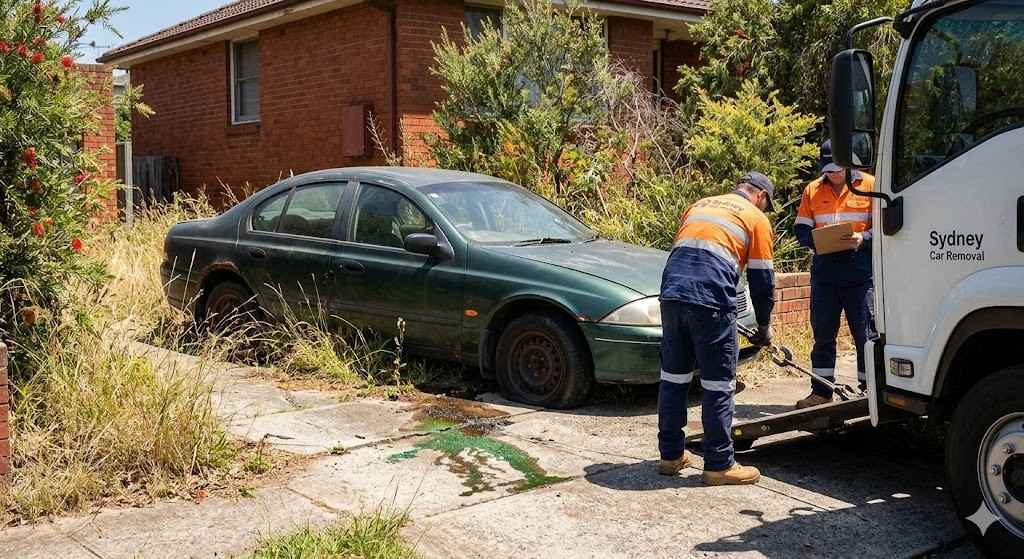
Stationary vehicles leak 6 hazardous fluids that seep into the soil and stormwater systems of Sydney’s residential blocks. These substances create long-term environmental damage that requires professional—and expensive—soil remediation if the property is ever sold or redeveloped.
Specific pollutants include:
-
Engine Oil and Transmission Fluid: These contain heavy metals like lead and cadmium.
-
Ethylene Glycol (Coolant): A sweet-smelling but highly toxic chemical that attracts and kills local pets and wildlife.
-
Sulphuric Acid: Found in corroding 12V batteries, this acid eats through concrete driveways and kills surrounding lawn.
-
Brake Fluid: A caustic substance that destroys paintwork and contaminates groundwater.
The cost of scraping and replacing 1 cubic metre of contaminated soil in NSW exceeds $500, excluding laboratory testing fees. By removing the vehicle early, you prevent these fluids from reaching a critical spill level.
4. Pest Infestations and Health Hazards
Abandoned cars serve as ideal breeding grounds for 4 common Sydney pests, including rats, cockroaches, spiders, and mosquitoes. The sheltered, dark environment of a car interior allows these populations to flourish undisturbed, eventually leading them to migrate into your primary residence.
-
Rodents: Rats chew through wiring harnesses and upholstery to build nests, often using the car as a “base of operations” before entering your kitchen.
-
Redback Spiders: Dry, dark corners like wheel arches and engine bays are primary habitats for venomous spiders.
-
Mosquitoes: Stagnant water pooling in rusted body panels or tyres becomes a nursery for larvae, increasing the risk of Ross River virus in local areas.
Professional pest control treatments for a yard infestation start at $300, but these are temporary fixes if the “source” (the car) remains on-site.
5. Opportunity Cost of Space
The physical footprint of an abandoned vehicle represents wasted real estate in a city where space is at a premium. A standard parking spot occupies roughly 14 square metres of land.
Use cases for reclaimed space include:
-
Installing a Granny Flat: Adding value and rental income to your property.
-
Landscaping: Extending your garden or outdoor entertaining area.
-
Boat or Caravan Storage: Saving you $200 per month in commercial storage fees.
-
Off-Street Parking: Reducing the risk of side-swipe damage to your daily driver.
6. The Solution: Professional Removal
The most effective way to eliminate these hidden costs is to utilise a licensed recycling service. Using a professional service ensures the vehicle is depolluted according to Australian standards and removed from your property ledger.
For residents looking for a seamless exit, Sydney Car Removal provides free towing and instant payment for end-of-life vehicles across the metropolitan region. This process turns a mounting liability into a liquid asset in under 24 hours, effectively stopping the cycle of depreciation and potential fines.
visit: https://www.sydneycarremoval.com.au/
Comparison of Disposal Methods:
| Feature | Council Pickup | Private Sale | Professional Removal |
| Cost to You | $300+ (Fine/Fee) | $50 (Advertising) | $0 (Free) |
| Paperwork | Complicated | High (Buyer ID) | Minimal (Owner ID) |
| Speed | 7 – 30 Days | Weeks/Months | Same-day/24 Hours |
| Environmental Care | Variable | Unknown | High (Licensed Wrecker) |
7. Target Audience and Situational Relevance
This information is vital for 3 specific groups of Sydney residents:
-
Executors of Estates: People managing the clearance of a deceased relative’s property.
-
Renovators: Homeowners needing to clear land for construction or landscaping projects.
-
Downsizers: Residents moving to apartments who cannot take a non-running vehicle with them.
In these situations, the “cost of doing nothing” is almost always higher than the cost of immediate disposal. A car that sits for 12 months in the Sydney humidity will suffer from seized brakes, rotted tyres, and interior mould, making it significantly harder and more expensive to move later.
Conclusion
Keeping an abandoned vehicle on your Sydney property costs you thousands of dollars in hidden fees, lost property value, and environmental risks. Between the $2,000 potential EPA fines and the $45,000 hit to your home’s market appeal, the financial burden is undeniable. By acting decisively and opting for professional removal, you reclaim your space, protect the local environment, and put an end to the “money pit” sitting in your driveway.