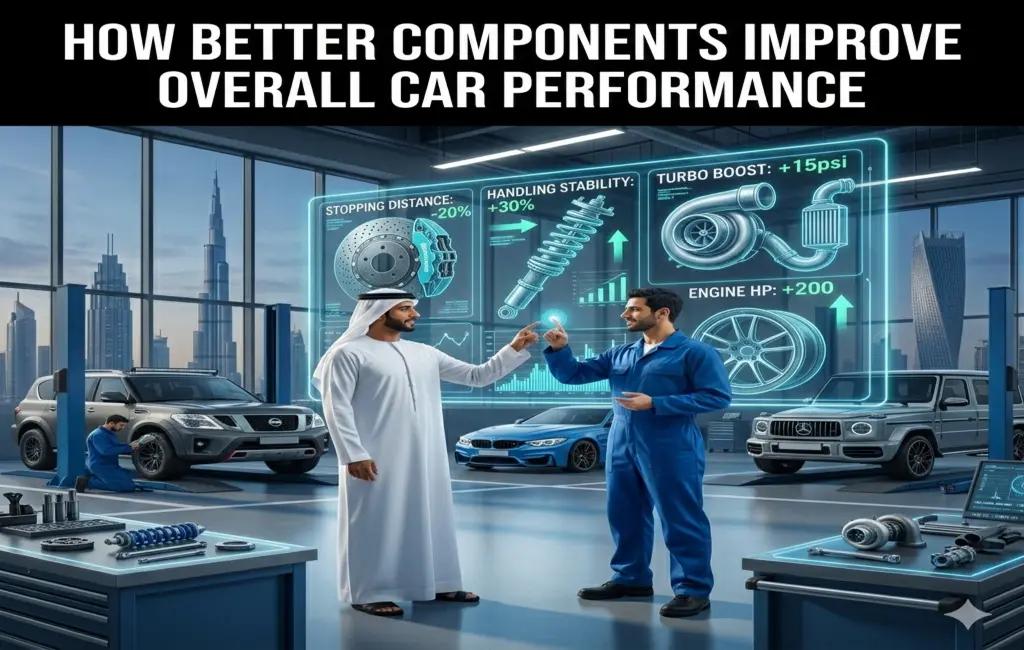
When people hear the word performance, they often think of racing cars or high speeds. However, for the average driver in the UAE, car performance means something very different. It is about reliability, efficiency, and how the car feels during the daily commute.
A vehicle that performs well responds instantly to the driver. It accelerates smoothly onto highways and stops safely in heavy traffic. Achieving this level of operation requires more than just regular fuel top ups. It depends heavily on the quality of the parts under the bonnet.
Focusing on car performance improvement is the best way to ensure a safe and enjoyable driving experience. By upgrading or maintaining key components, you transform the character of your vehicle. This guide explores how quality parts work together to elevate your daily drive.
What Car Performance Really Means
True performance is a balance of power, control, and comfort. It is not just about how fast a car can go, but how well it handles the journey. For drivers in Dubai and Sharjah, this means handling heat and traffic effortlessly.
A high performing car inspires confidence in the driver. It does not vibrate at highway speeds or hesitate when the traffic light turns green. This reliability is the result of all mechanical systems working in harmony.
Mechanical Components That Influence Performance
A car is a complex machine made of thousands of parts. However, a few key systems have the biggest impact on how it drives. The engine, suspension, brakes, and tyres are the primary contributors to performance.
When these components are in top condition, the car feels tight and responsive. If even one of them is substandard, the whole driving experience suffers. For example, a powerful engine is useless if the suspension cannot handle the weight transfer.
Why Component Quality Matters More Than Quantity
You do not need to add dozens of aftermarket modifications to improve your car. Often, simply replacing worn factory parts with high quality alternatives is enough. Premium components are built with better materials and tighter tolerances.
In the harsh climate of the UAE, cheap plastic and rubber parts degrade quickly. Investing in quality ensures that the parts last longer and perform better under stress. It is a long term strategy that saves money and improves safety.
How Engine Related Components Affect Driving Experience
The engine is the heart of the vehicle, and its efficiency dictates how the car drives. Smooth power delivery makes merging onto Sheikh Zayed Road safer and easier. It also reduces the physical strain on the driver during long commutes.
Improving engine performance does not always mean adding horsepower. It often means restoring lost efficiency through better maintenance components. A clean, well lubricated engine is a responsive engine.
Fuel, Air, and Cooling Systems Working Together
An engine needs three things to run: fuel, air, and spark. High quality air filters ensure that the engine breathes freely, even in dusty conditions. This improves throttle response and fuel economy.
Fuel injectors and pumps must deliver petrol precisely. Using quality fuel system cleaners or parts ensures smooth combustion. This eliminates the stuttering or hesitation often felt in older cars.
Cooling is critical in the desert heat. A high performance radiator and quality coolant prevent the engine from losing power due to heat soak. Keeping the engine cool ensures consistent performance even in August.
The Link Between Engine Health and Reliability
An engine that runs efficiently undergoes less internal stress. Quality oil filters and synthetic lubricants reduce friction between moving parts. This preservation of metal components extends the life of the engine.
Reliability means your car starts every time and gets you home. High quality belts and hoses prevent the sudden failures that leave drivers stranded. It transforms a car from a source of worry into a trusted tool.
The Role of Tyres and Suspension in Vehicle Control
While the engine provides the power, the chassis controls it. The suspension and tyres determine how that power is translated to the road. This connection is vital for safety and driving pleasure.
Many drivers overlook these components until they fail. However, upgrading them can provide the most noticeable change in how a car feels. It affects everything from cornering to ride comfort.
How Tyres Directly Impact Grip and Stability
Tyres are the only point of contact between your vehicle and the road surface. They are responsible for transmitting acceleration, braking, and steering forces. A premium tyre compound grips the road better than a budget alternative.
Drivers often choose top quality tyres to ensure their vehicle handles the intense heat and high speeds typical of UAE highways, providing a necessary safety margin. These tyres maintain their structural integrity better, preventing the “squirmy” feeling of soft sidewalls. Better grip translates directly to improved confidence behind the wheel.
They also reduce road noise, making the cabin quieter. This contributes to a premium driving feel that reduces fatigue on long trips.
Suspension Components and Ride Comfort Balance
The suspension system absorbs bumps and keeps the tyres planted on the road. Shock absorbers and springs work together to manage the weight of the car. High quality shocks react faster to road imperfections.
In Sharjah, where road surfaces can vary, good suspension is essential. It prevents the car from bouncing excessively after a speed bump. This control keeps the vehicle stable and the passengers comfortable.
Replacing worn bushings with quality parts tightens up the steering. It removes the vague feeling often associated with older cars. The result is precise handling that responds instantly to your inputs.
Braking Systems and Their Impact on Performance Safety
Braking is often thought of as a safety feature, but it is also a performance metric. The ability to stop quickly and consistently allows you to drive more smoothly. It removes the panic from sudden traffic stops.
Performance braking does not mean you need race car brakes. It means having a system that does not fade under the heat of heavy use.
How Brake Components Affect Response Time
Brake pads and rotors rely on friction to stop the car. Premium pads bite harder and resist heat better than standard organic pads. This provides a linear feel through the brake pedal.
You want the brakes to engage progressively, not grab suddenly. Quality components offer this modulation, allowing for smooth deceleration. This prevents the jerky stops that are uncomfortable for passengers.
Why Reliable Brakes Improve Overall Driving Confidence
Knowing your car can stop on a dime changes how you drive. You are less stressed in stop and go traffic. You can navigate highway speeds knowing you have the stopping power to handle emergencies.
Brake fluid is also a key component. High boiling point fluid prevents the pedal from going soft during hard use. Maintaining the braking system is the single best way to protect your car and yourself.
Electrical and Support Systems Often Overlooked
Modern cars are computers on wheels. Sensors and electronic systems manage every aspect of performance. If these electrical signals are weak or interrupted, the car will not run correctly.
The battery, alternator, and sensors are the nervous system of the vehicle. Ensuring they are in top shape is crucial for modern vehicle performance.
Sensors and Control Systems Supporting Performance
Sensors measure airflow, temperature, and wheel speed thousands of times a second. If an oxygen sensor is old, it sends lazy data to the computer. This results in poor fuel mixtures and sluggish performance.
Using high quality electronic components ensures accurate data transmission. This allows the engine management system to make precise adjustments. It keeps the car running at peak efficiency.
Why Small Components Still Make a Big Difference
Spark plugs are small but vital. A strong spark ensures complete combustion. Worn plugs cause misfires and wasted fuel.
Even the condition of the battery affects performance. A weak battery puts a heavy load on the alternator, dragging down the engine. Keeping the electrical system healthy frees up power for driving.
Conclusion
Improving your vehicle is not about a single magic part. It is about the synergy of high quality components working in unison. Car performance improvement is the result of attention to detail and consistent maintenance.
When you invest in better parts, you get a car that is safer, smoother, and more reliable. It handles the challenges of UAE roads with ease. You transform your daily commute from a chore into a pleasure.
Take the time to evaluate the condition of your vehicle components. Replace worn parts with quality alternatives. The difference in how your car drives will be immediate and rewarding.
FAQ Section
Does upgrading components really improve car performance?
Yes, quality components improve efficiency, control, and reliability.
Are tyres part of vehicle performance?
Yes, they directly affect grip, braking, and stability.
Is performance improvement only about speed?
No, comfort, control, and safety are equally important.
Does climate affect component performance in UAE?
Yes, heat impacts tyres, fluids, and mechanical parts.