You keep hearing the term “fractional CMO” in founder circles. Your advisor mentioned it. A board member suggested it. But nobody has given you a clear picture of what a fractional CMO actually does on a daily and weekly basis. The ambiguity makes it hard to know whether this is the right move for your company.
Here is the honest breakdown of what falls inside the scope and what does not.
The Confusion Around Fractional CMO Responsibilities
The market has muddied this role. Some people calling themselves fractional CMOs are really marketing consultants who deliver a strategy document and move on. Others are glorified freelancers who run your Facebook ads. Neither is what you need.
A real fractional CMO operates as your head of marketing on a part-time or contract basis. They own strategy, execution, and results. They sit in your leadership meetings. They are accountable to your growth targets.
If they are not accountable to a number, they are not a CMO. They are an advisor.
What a Fractional CMO Actually Owns
The fractional CMO scope of work should cover these core responsibilities. Each one is essential for startups that need real growth, not just activity.
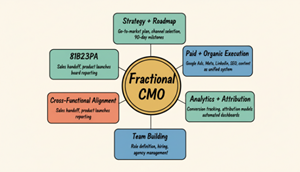
Marketing Strategy and Roadmap
They build your go-to-market plan from scratch or fix the one that is not working. This means channel selection, budget allocation, messaging, positioning, and a 90-day execution roadmap. Not a 50-page brand guide. A working plan with clear milestones.
Paid Media and Organic Growth Execution
The best fractional leaders do not just plan. They run campaigns directly. That includes Google Ads, Meta, LinkedIn, SEO, and content — all managed as a unified system. A fractional cmo who separates strategy from execution creates a gap that kills momentum.
Analytics and Attribution
They set up proper conversion tracking, build attribution models, and create automated dashboards so you can see what is working in real time. This is not optional. Marketing without measurement is just spending.
Team Building and Vendor Management
When you are ready to hire, they define roles, write job descriptions, and interview candidates. They also evaluate and manage agency relationships. They know when to build internal capability and when to outsource.
Cross-Functional Alignment
They work with your sales team on lead handoff and feedback loops. They coordinate with product on launch strategy. They present to your board with data-driven updates, not narrative fluff.
What a Fractional CMO Does Not Do
Understanding the boundaries is just as important as understanding the scope.
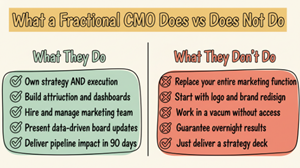
They do not replace your entire marketing function. A fractional CMO is leadership, not a team of one. They may execute directly in the early days, but the goal is to build systems and eventually a team.
They do not do brand redesigns as a first move. If someone’s first recommendation is a new logo and website, question their priorities. Revenue-driving activities come first. Brand polish comes later.
They do not work in a vacuum. A fractional cmo needs access to your CRM, analytics, sales data, and leadership team. Treating them as an external vendor limits their impact.
They do not guarantee overnight results. Realistic timelines matter. Expect leading indicators within 30 days and measurable pipeline impact within 90. Anyone promising revenue in week one is selling you something.
How to Scope the Engagement Right
The most effective fractional CMO engagements start with clear expectations on both sides.
Define three to five measurable outcomes for the first quarter. Agree on time commitment — typically 15 to 25 hours per week for meaningful impact. Establish reporting cadence and access to tools and data from day one.
The startups that get the most value treat their fractional CMO as a true member of the leadership team. They include them in strategic decisions, share context openly, and hold them to the same standards as any other executive.
The ones that struggle treat this like an outsourced project. They gate access, withhold context, and wonder why results are slow. The role only works when the relationship works.