Looking for “ev charger installations near me” means you want a fast, safe way to power your vehicle at home or work. You can find qualified local installers who assess your electrical panel, recommend the right Level 2 charger, handle permits, and complete a compliant Ev Charger Installations charge reliably and safely.
This article shows how to locate nearby installers, compare quotes and services, and spot installers who offer financing, warranties, or maintenance. You’ll learn practical steps to get an accurate price range and choose a pro who matches your needs and budget.
EV Charger Installations Near Me
Local installers typically help you pick the right charger, confirm electrical capacity, and complete a code-compliant install. Expect options from slow (Level 1) home setups to fast (Level 3) commercial units, with permits and possible incentives affecting cost and timing.
Types of EV Chargers Available
Level 1 chargers use a standard 120V outlet and add about 3–5 miles of range per hour. They work for overnight charging and drivers with low daily mileage who don’t want electrical upgrades.
Level 2 chargers run on 240V and deliver roughly 15–60 miles of range per hour depending on amperage (16–80 A). These are the most common residential installs; you’ll choose between hardwired units and plug-in models with a dedicated circuit.
DC fast chargers (Level 3) provide 50 kW to 350 kW and add hundreds of miles per hour. They require industrial power, significant site work, and are usually installed at commercial or fleet locations rather than private homes.
Choosing the Right Charger for Your Vehicle
Match charger power to your vehicle’s onboard charger rating. Check your EV’s maximum AC charging rate in kW — installing a Level 2 unit with similar or slightly higher capacity avoids wasted expense.
Decide on cable length and connector type: Type 1 vs. Type 2 in some regions, or CCS/CHAdeMO for DC fast charging. For shared parking or rental properties, consider networked chargers that support user accounts and billing.
Factor in future needs: if you plan a higher-range EV later, choose a higher-amp Level 2 unit or prewire the garage to ease later upgrades. Balance purchase cost, installation complexity, and daily charging speed expectations.
Installation Requirements and Process
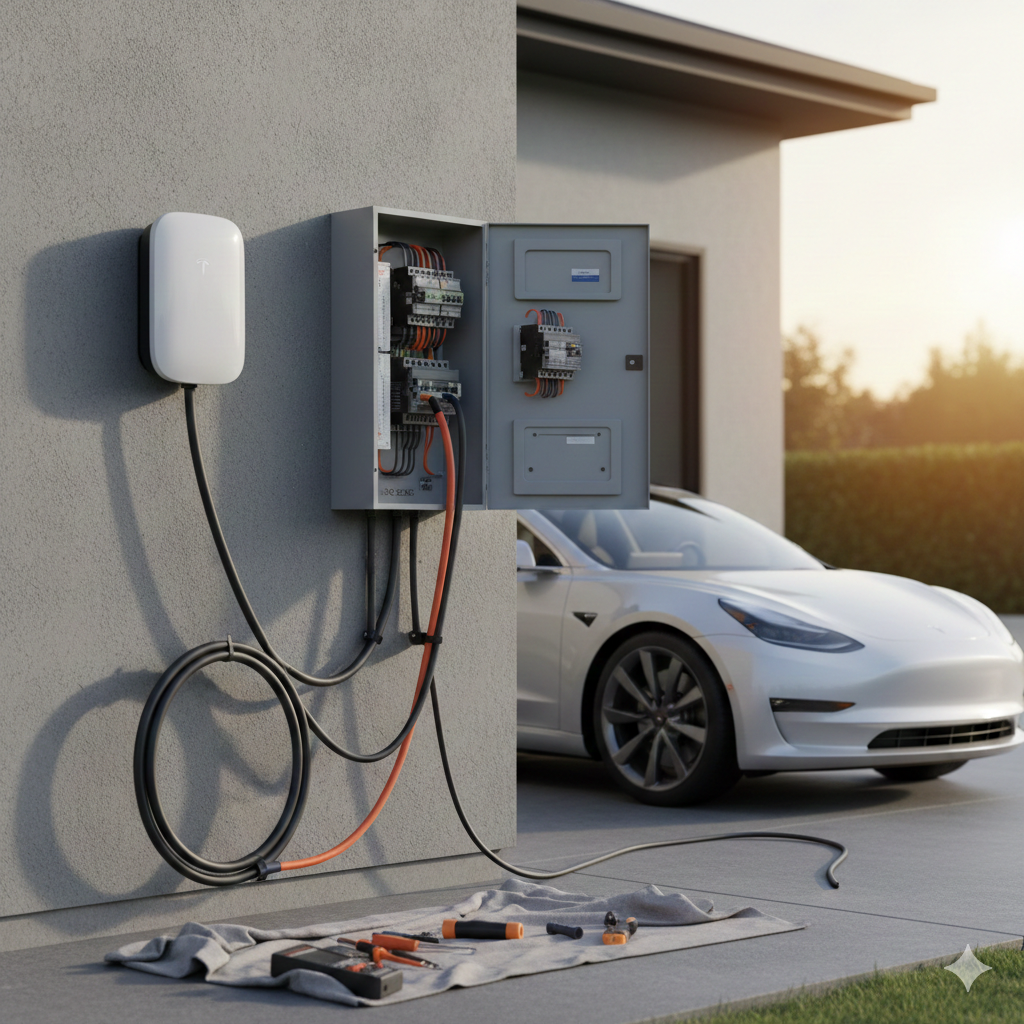
Start with a site assessment from a certified electrician or approved installer to verify panel capacity and circuit routing. They’ll measure distance to the parking location, inspect the main service, and recommend upgrades if needed.
Typical residential installs require a dedicated 240V circuit, a wall-mounted or pedestal charger, and local permits. Expect 2–8 hours of onsite work if no panel upgrade is needed; panel upgrades or trenching for exterior runs add days and cost.
Ask installers about permits, electrical inspection, warranty, and eligibility for local grants or rebates. Request a written quote that lists equipment, labor, permit fees, and estimated timelines before you authorize work.
Finding Qualified Local EV Charger Installers
Focus on installers who hold the right electrical and EV-specific credentials, have recent local project experience, and provide clear written quotes that list labor, parts, permits, and any panel upgrades.
Certifications and Experience to Look For
Check for a licensed electrician with a current state or provincial electrical license; this is non-negotiable for code-compliant work. Confirm the installer carries general liability insurance and worker’s compensation.
Look for EV-specific certifications such as manufacturer installer programs (e.g., ChargePoint, Tesla, JuiceBox) or third-party credentials from organizations that verify EV charging installations. Ask for references or photos from installs done within the last 12–24 months, ideally in homes with similar service panels and garage configurations to yours.
Verify familiarity with local permitting and utility interconnection rules. Confirm the installer can secure permits, schedule inspections, and provide a stamped load calculation if you expect a panel upgrade or a dedicated 240V circuit.
Cost Factors of Installation Services
Get itemized quotes that separate equipment, labor, permit fees, and any electrical upgrades. Typical cost drivers include charger model (smart vs. basic), distance from panel to mounting location, need for trenching or conduit, and whether a panel or service upgrade is required.
Expect electricians to charge a fixed installation fee plus parts; hourly rates vary by region. Ask about warranty coverage on both the charger and the installation labor, and whether the installer offers maintenance or aftercare service agreements.
Compare at least three local bids and confirm all quotes assume the same scope: same charger model, routing, and permit responsibility. Request a written timeline and payment schedule before work begins.